




What's Happening?
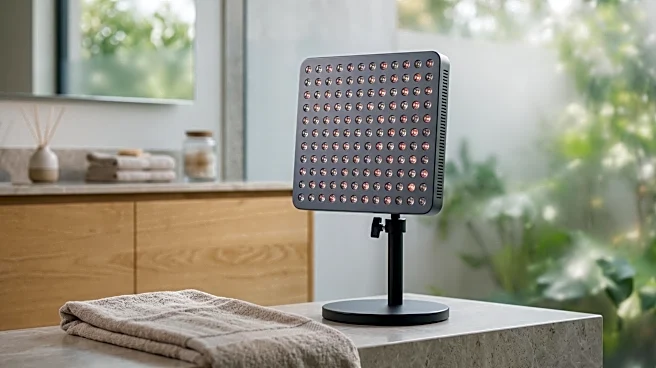
Consumers are increasingly turning to more affordable red light therapy panels, such as the Viconor Red Light Therapy Lamp for Face and Body, as an alternative to high-priced masks that can cost between $500 and $800. The Viconor lamp, currently priced at $76,
offers 120 LEDs that combine 660 nm red light with 850 nm near-infrared light. Shoppers appreciate its panel-style design, which allows for broader light exposure and the ability to treat multiple body parts simultaneously, including the face, neck, and chest. Reviewers highlight the lamp's versatility, portability, and adjustable features, such as a stand and a 180-degree adjustable base for customized angles. Red light therapy itself is gaining popularity in the wellness world, with scientific backing for potential benefits like reducing wrinkles, improving skin texture, aiding acne treatment, promoting hair growth, assisting muscle recovery, and providing pain relief.
Why It's Important?
This shift in consumer preference towards more affordable red light therapy devices has significant implications for the U.S. wellness and beauty industries. It democratizes access to a popular wellness trend, making it available to a wider demographic who might be deterred by the high cost of premium masks. This could lead to increased market penetration for red light therapy products and potentially drive innovation in the budget-friendly segment. For manufacturers of expensive devices, it signals a need to justify higher price points with unique features or superior efficacy, or risk losing market share. The trend also highlights consumer savviness in seeking value, leveraging online marketplaces like Amazon to find effective alternatives. This could influence retail strategies, prompting more brands to offer diverse price points and product formats to cater to varying consumer budgets and preferences in the rapidly growing at-home wellness market.
What's Next?
The growing popularity of affordable red light therapy panels suggests several potential developments in the wellness technology market. Manufacturers of higher-end devices may respond by either reducing prices, introducing more budget-friendly lines, or emphasizing unique features and clinical backing to differentiate their premium products. We might also see an increase in competition among manufacturers of panel-style devices, leading to further innovation in design, LED technology, and user-friendly features. Retailers, particularly online platforms, will likely expand their offerings of these more accessible devices. Additionally, as more consumers adopt at-home red light therapy, there could be a rise in demand for complementary products or educational content on best practices for safe and effective use. The long-term impact could also include greater mainstream acceptance of light therapy as a routine self-care practice, potentially influencing broader trends in personal health and beauty routines.
Beyond the Headlines
The trend of consumers opting for budget-friendly red light therapy panels over expensive masks reflects a broader cultural shift towards accessible self-care and wellness. It underscores a growing consumer skepticism towards high-priced beauty gadgets, prompting a search for efficacy without exorbitant costs. This movement challenges the notion that premium pricing equates to superior results, empowering consumers to make informed choices based on value and reviews. Ethically, the availability of more affordable options promotes greater equity in wellness, allowing a broader segment of the population to access potential health benefits. However, it also raises questions about product quality and safety standards across a wider range of price points, necessitating consumer diligence and potentially increased regulatory oversight. Culturally, it signifies a move towards practical, results-oriented wellness solutions that integrate seamlessly into daily life, rather than being exclusive luxuries, further embedding self-care as a mainstream, attainable practice.