






What's Happening?
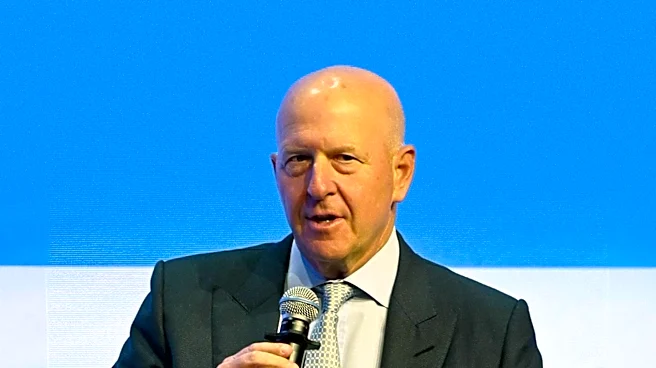
Goldman Sachs, under the leadership of Chairman and CEO David Solomon, is strategically repositioning itself by focusing on its Global Banking & Markets (GBM) and Asset & Wealth Management (AWM) franchises. The firm is completing its exit from consumer
banking, including the transition of the Apple Card program to JPMorgan Chase and the divestiture of GreenSky. This shift aims to concentrate capital on higher-margin, capital-efficient activities where Goldman Sachs holds competitive advantages. Solomon has indicated that dealmaking activity, particularly mergers and acquisitions (M&A) and initial public offerings (IPO), is expected to accelerate, citing a four-year high in backlog and ample private-equity capital. The firm is also targeting approximately $300 billion in private credit by 2029, supported by record assets under supervision of about $3.7 trillion. Goldman Sachs's 'One Goldman Sachs 3.0' initiative is designed to enhance operating leverage and achieve a 60% efficiency ratio in the medium term.
Why It's Important?
This strategic pivot by Goldman Sachs has significant implications for the U.S. financial landscape. By divesting from consumer banking, the firm is shedding less profitable and more capital-intensive ventures to double down on its traditional strengths in investment banking and asset management. This move could lead to increased competition in these core areas, potentially affecting other major financial institutions. The anticipated acceleration in M&A and IPO activity, driven by a substantial backlog and private-equity capital, signals a potential resurgence in corporate dealmaking, which can stimulate economic growth and create opportunities for various businesses. Furthermore, Goldman Sachs's aggressive target for private credit expansion highlights a growing trend in alternative investments, offering new avenues for capital deployment and potentially influencing credit markets. The firm's focus on AI-driven efficiency also underscores the broader industry's push towards technological integration to optimize operations and profitability.
What's Next?
Goldman Sachs's trajectory in the coming months will largely depend on the pace of capital-markets recovery and the firm's ability to execute its strategic refocus. Quarterly earnings releases will be crucial checkpoints, with investors closely monitoring investment-banking fees, equities financing, and AWM fundraising. The firm plans to continue returning substantial capital to shareholders through buybacks and dividends while maintaining a strong Common Equity Tier 1 (CET1) capital ratio. Management expects to raise over $125 billion in alternatives fundraising in 2026, which will further shape market sentiment. The firm's goal of building 'durable revenue streams' through asset and wealth management, targeting a 30% margin, will be a key indicator of its success. The broader macroeconomic environment, including interest rates, inflation trends, and central-bank policy, will also significantly influence Goldman Sachs's performance and the overall capital markets.
Beyond the Headlines
Goldman Sachs's strategic shift reflects a broader trend among large financial institutions to adapt to evolving market conditions and regulatory pressures. The exit from consumer banking, a segment that proved challenging for the firm, highlights the complexities of diversifying beyond core competencies for established players. The increased emphasis on private credit and alternative investments points to a structural change in how capital is raised and deployed, potentially leading to a more opaque and less regulated financial ecosystem. The integration of artificial intelligence across trading, investment banking, and asset management signifies a long-term commitment to technological innovation, which could redefine efficiency standards and competitive advantages in the financial sector. This strategic evolution by a major player like Goldman Sachs could set a precedent for other firms, influencing the future direction of the U.S. financial industry towards more specialized, technology-driven, and fee-based revenue models.