





What's Happening?
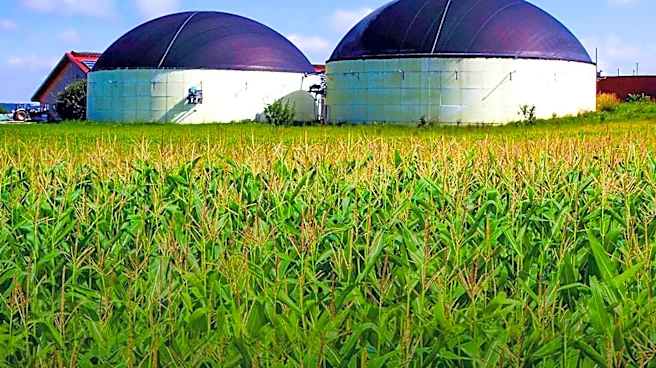
The future of food manufacturing is increasingly dependent on existing biomanufacturing infrastructure, rather than new technological breakthroughs. ADM has invested $55.5 million to convert an under-utilized fermentation facility in Clinton, Iowa, into a precision
fermentation operation. This facility will produce high-value proteins and enzymes for food, feed, and industrial markets. The project focuses on upgrading existing fermentation equipment and adding downstream systems for separation, purification, drying, and packaging. This move highlights a growing trend of retrofitting and repurposing existing industrial assets, such as former food plants and second-hand fermentation tanks, to scale up biomanufacturing capacity. For instance, Ayana Bio and Zenfold Sustainable Technologies acquired 12 second-hand fermentation tanks from a former Meati Foods facility for a mere $75,000, demonstrating a buyer's market for such hardware. The Iowa Economic Development Authority has approved $2.23 million in tax credits for ADM's project, which is expected to create 53 jobs.
Why It's Important?
This shift in focus from purely scientific breakthroughs to infrastructure development is crucial for the commercial viability of alternative proteins and other biomanufactured food ingredients. The ability to produce consistent, food-grade ingredients at a cost the market will accept is largely determined by efficient and scalable infrastructure. Retrofitting existing facilities offers significant advantages, including reduced capital expenditure (potentially 40-60% less than new builds) and shorter timelines (9-18 months for brownfield conversions compared to 18-36 months for greenfield). This approach can accelerate the market entry and widespread adoption of innovative food products. Furthermore, the emphasis on downstream processing—separation, purification, drying, and packaging—is critical, as these steps often represent the bottleneck in commercial production. Without adequate downstream capacity, even advanced fermentation capabilities can lead to idle assets and hinder market supply. The strategic repurposing of facilities also addresses sustainability concerns by utilizing existing resources and reducing the environmental impact associated with new construction.
What's Next?
Over the next year, the market for retrofitting and second-hand biomanufacturing equipment is expected to mature, prompting companies to audit their under-utilized assets, including fermentation plants, food factories, and pharmaceutical sites. Within three years, brownfield conversions are anticipated to deliver significant volumes of ingredients, with downstream processing becoming a critical determinant of a company's ability to fulfill customer orders. Looking five years ahead, distributed and modular production networks may emerge as a strategic choice, allowing companies to build smaller, flexible facilities closer to feedstocks, energy sources, and customers. In the longer term, over 10-plus years, food manufacturing could evolve into a network of flexible, repurposed facilities coordinated by data, sensors, and artificial intelligence. This evolution will require continuous assessment of asset conditions, regulatory pathways, local workforce availability, and utility access to ensure cost-effectiveness and competitiveness. The role of China, with its extensive existing fermentation capacity, could also significantly influence global biomanufacturing economics.
Beyond the Headlines
The focus on infrastructure highlights a broader shift in the food industry towards industrial efficiency and capital discipline. While scientific innovation remains important, the ability to translate laboratory successes into commercially viable products at scale is now paramount. This trend could lead to a consolidation of manufacturing capabilities, favoring companies that can strategically acquire, retrofit, or repurpose existing facilities. The ethical implications of this shift include ensuring that repurposed facilities meet modern food safety and quality standards, as older infrastructure may have outdated systems. Furthermore, the competitive landscape could be significantly altered by countries like China, which possess vast existing fermentation capacity and are increasingly viewing biomanufacturing as strategic infrastructure. This could lead to a global competition for manufacturing advantage, where access to affordable and reliable production capacity becomes a key differentiator, potentially overshadowing technological superiority alone.