






What's Happening?
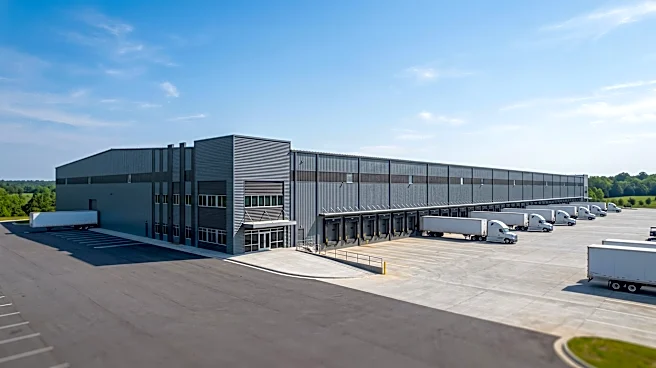
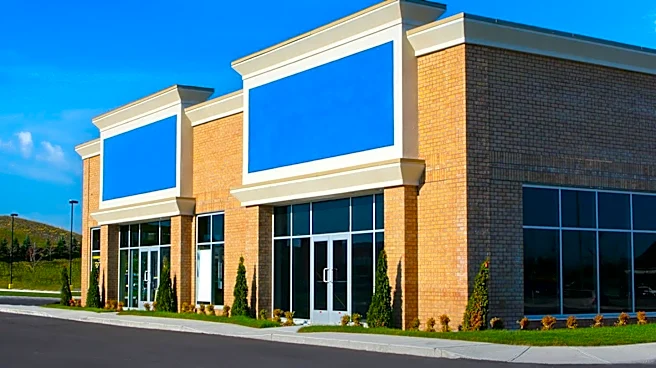
Northwest Arkansas is experiencing a tight commercial real estate market, particularly for office, industrial, and retail spaces, despite ongoing new construction. A recent quarterly regional market summary released by Cushman & Wakefield | Sage Partners
indicates that industrial vacancy in the region stands at 5.3%, significantly lower than the national average of 7.4%. Office vacancy is reported at 5.9%, compared to 20.1% nationally, and retail vacancy is 3.9%, against a national figure of 4.3%. This report highlights a robust commercial sector in Northwest Arkansas, driven by new infrastructure and investments. The region is seeing the development of projects such as the Alice Walton School of Medicine Whole Health Campus and the opening of the Springdale northern bypass. Additionally, a new 'Class A' office building, The Visionaries, was completed in the third quarter and is largely leased, reflecting a trend where tenants favor modern, amenity-rich properties, leading to higher vacancy rates in older 'class B and C' buildings.
Why It's Important?
The low commercial vacancy rates in Northwest Arkansas signal a strong and growing regional economy, which is important for both local and national economic indicators. The demand for new, high-quality commercial spaces suggests a healthy business environment, attracting new companies and fostering expansion among existing ones. This trend can lead to job creation, increased tax revenues for local governments, and further investment in infrastructure and community development. The preference for 'Class A' office buildings indicates a shift in tenant expectations, pushing developers to construct modern facilities that meet contemporary business needs. This could also mean that older, less amenity-rich properties may struggle to attract tenants, potentially leading to depreciation in value for those assets. For national businesses looking to expand or relocate, Northwest Arkansas presents an attractive market with available, modern commercial spaces and a supportive economic climate.
What's Next?
The continued development of new infrastructure and investment projects, such as the Alice Walton School of Medicine Whole Health Campus and the Springdale northern bypass, is expected to further strengthen the commercial real estate market in Northwest Arkansas. The high demand for 'Class A' office spaces will likely encourage more developers to focus on constructing modern, amenity-rich buildings. This could lead to a sustained period of growth in the region's commercial sector. However, it also suggests that owners of older 'class B and C' properties may need to consider significant renovations or repurposing to remain competitive. Local authorities and economic development agencies will likely continue to promote the region's growth, potentially attracting more businesses and residents, which in turn will maintain demand for commercial and residential properties. The market will need to balance new construction with sustained demand to avoid oversupply in the long term.
Beyond the Headlines
The robust commercial real estate market in Northwest Arkansas, characterized by low vacancy rates and a preference for modern facilities, reflects broader demographic and economic shifts in the U.S. The region's ability to attract significant investment and new businesses, even as national vacancy rates remain higher, points to a successful regional development strategy. This success could serve as a model for other mid-sized metropolitan areas seeking to stimulate economic growth. The emphasis on 'Class A' properties also highlights an evolving standard for workspaces, where amenities and modern design are increasingly crucial for attracting and retaining talent. This trend could accelerate the obsolescence of older commercial buildings, posing challenges for urban planning and property management in areas with aging infrastructure. Furthermore, the growth could lead to increased population density and demand for housing, potentially impacting affordability and local resources.