


What's Happening?
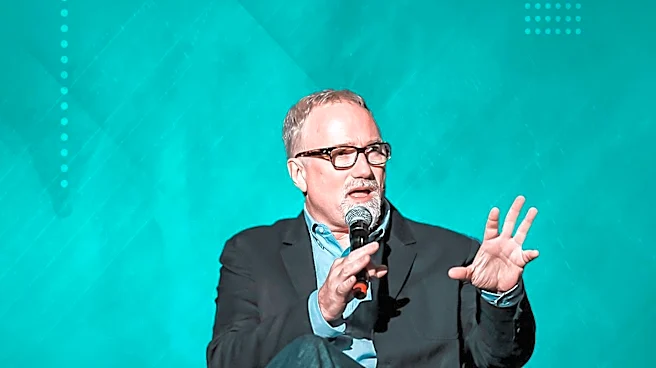
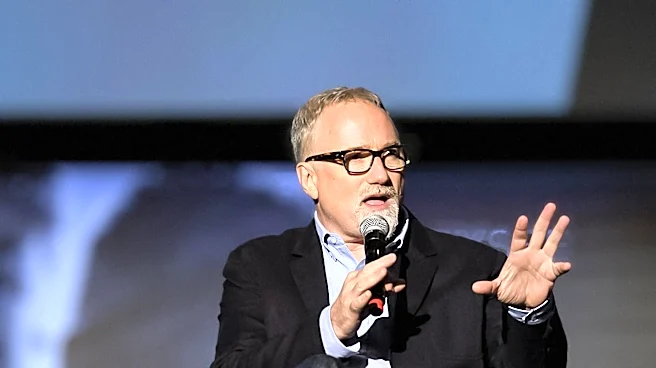
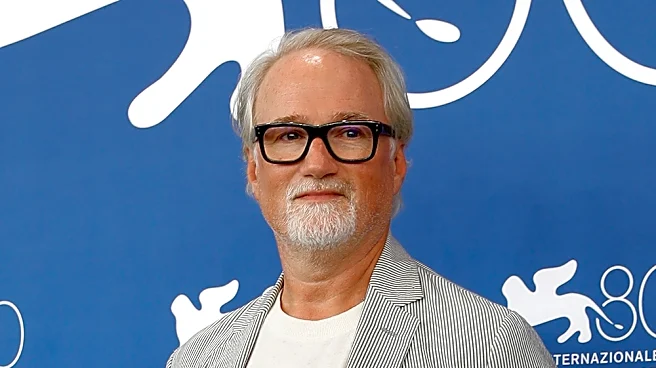
Filmmaker David Fincher has confirmed the use of artificial intelligence in the post-production of his film 'The Further Mis-Adventures of Cliff Booth.' In an interview on The Ringer’s 'Big Picture' podcast, Fincher explained that AI was primarily utilized
to enhance the work of human actors, specifically in syncing dialogue. He stated that AI helped align the best take of a line reading with the best performance take when they did not perfectly match on camera. Fincher noted that only about 5% of the film's dialogue relied on traditional automated dialogue replacement (ADR), with the rest being handled by AI. He views AI as a tool that offers creative freedom, allowing filmmakers to focus on visual and auditory perfection without being constrained by technical limitations. Fincher also expressed his belief that AI will continue to be based on human movement and behavior, suggesting it will streamline production processes rather than replace human creativity.
Why It's Important?
David Fincher's embrace of AI in 'Cliff Booth' signifies a growing trend and a significant shift in the filmmaking industry, particularly in the U.S. This development highlights the increasing integration of advanced technology into creative processes, potentially redefining traditional production workflows. The use of AI for tasks like lip-syncing could lead to more efficient post-production, reducing the need for extensive reshoots or ADR sessions, which are often costly and time-consuming. This could impact various stakeholders, from studio executives seeking cost efficiencies to actors and crew members whose roles might evolve. While Fincher frames AI as a tool for enhancement, it also raises broader questions about the future of human labor in creative fields and the authenticity of performances. Netflix, which acquired an AI tool startup and has used generative AI in over 300 programs, is a major proponent, indicating a strong industry push towards these technologies.
What's Next?
The discussion surrounding AI in 'Cliff Booth' is likely to intensify, especially given earlier allegations from early screenings regarding generative AI use in certain scenes. Fincher's comments provide a partial explanation, but the broader implications for filmmaking are still unfolding. The industry will continue to grapple with the ethical and practical considerations of AI integration. We can expect ongoing debates about intellectual property, the potential for job displacement, and the definition of authorship in an AI-assisted creative landscape. As technology advances, filmmakers and studios will likely explore more sophisticated applications of AI, from pre-visualization to special effects, further blurring the lines between human and machine contributions. The success and reception of 'Cliff Booth' could serve as a case study, influencing how other major studios and independent filmmakers approach AI in their future projects.
Beyond the Headlines
The use of AI in filmmaking, as exemplified by Fincher's 'Cliff Booth,' delves into profound philosophical and artistic questions. Fincher's analogy of working with 'plasticine' rather than 'marble' suggests a shift towards a more malleable and iterative creative process, where perfection can be achieved through digital manipulation. This raises questions about the nature of artistic authenticity and the value of human imperfection. If AI can seamlessly correct minor flaws or enhance performances, what does it mean for the raw, unedited human element in art? Furthermore, the debate extends to the audience's perception: will viewers accept AI-generated elements as integral to a film's artistic vision, or will it lead to a sense of detachment or artificiality? The industry's rapid adoption of AI, particularly by major players like Netflix, indicates a long-term commitment to these tools, suggesting a future where AI is not just a novelty but a fundamental component of cinematic creation, potentially reshaping the very definition of what it means to make a movie.