





What's Happening?
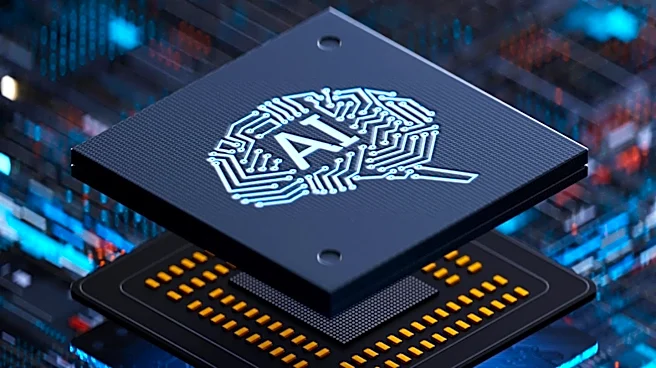
OpenAI is actively recruiting an Advanced Manufacturing Technology Lead to spearhead the development of next-generation high-density, high-speed, and high-power compute boards. This role is crucial for advancing AI-native silicon and system-level solutions,
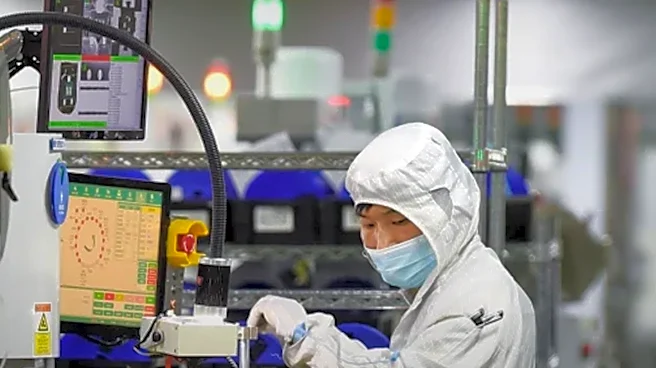
which are essential for the demanding workloads of advanced AI. The selected individual will be responsible for owning the manufacturing technology roadmap for bare printed circuit board (PCB) fabrication and board assembly, ensuring critical materials, structures, and processes are qualified before product designs are finalized. This technical leadership position involves hands-on work, spanning early experiments, test vehicles, pilot builds, and the transfer of new technologies to production teams. The lead will collaborate with various engineering teams, including board design, signal integrity, packaging, and reliability, as well as external partners like PCB fabricators and equipment suppliers, to translate manufacturing insights into practical design rules and robust production processes. The initiative aims to deliver faster, more efficient, and production-ready hardware for OpenAI’s supercomputing platform.
Why It's Important?
This strategic hiring by OpenAI underscores the critical importance of hardware innovation in the rapidly evolving field of artificial intelligence. By focusing on advanced manufacturing technology for compute boards, OpenAI aims to overcome current limitations in processing power and efficiency, which are vital for developing and deploying increasingly complex AI models. Improved hardware capabilities can significantly reduce the computational costs associated with training and running large AI models, making advanced AI more accessible and scalable. This move could also set new industry standards for AI hardware, influencing other technology companies to invest further in specialized silicon and manufacturing processes. The development of more efficient and powerful AI hardware has broad implications for various U.S. industries, from cloud computing and data centers to autonomous systems and scientific research, by enabling faster data processing and more sophisticated AI applications. It positions the U.S. at the forefront of AI hardware innovation, potentially creating new economic opportunities and strengthening its competitive edge in the global technology landscape.
What's Next?
The successful integration of an Advanced Manufacturing Technology Lead will likely accelerate OpenAI's hardware development cycle, leading to the introduction of more powerful and efficient AI-native silicon and integrated systems. This could result in significant advancements in the capabilities of OpenAI's frontier models, potentially enabling new breakthroughs in AI research and applications. The role's focus on qualifying materials and processes before design lock-down suggests a proactive approach to manufacturing, which could reduce production costs and improve reliability in the long run. Future developments may include the establishment of new partnerships with specialized manufacturers and suppliers, further solidifying OpenAI's supply chain for advanced hardware components. The insights gained from this role could also contribute to the broader AI hardware ecosystem, influencing design principles and manufacturing best practices across the industry. Ultimately, this initiative is expected to enhance the performance and scalability of OpenAI's supercomputing platform, supporting the deployment of next-generation AI technologies.
Beyond the Headlines
The pursuit of advanced manufacturing technology for AI hardware by OpenAI highlights a broader trend in the technology sector: the increasing convergence of software and hardware development. As AI models become more sophisticated, the demand for specialized hardware that can efficiently execute these models grows. This shift moves beyond generic computing platforms towards highly optimized, AI-native silicon, indicating a fundamental change in how AI systems are designed and deployed. The emphasis on 'interconnects' and 'via structures' in PCB fabrication points to the intricate engineering challenges involved in creating these high-performance systems, where even microscopic details can significantly impact overall performance. This focus on hardware co-design also raises questions about intellectual property and supply chain resilience, as companies like OpenAI seek to control more aspects of their technology stack. The long-term implications could include a more vertically integrated AI industry, where leading AI developers also become significant players in hardware manufacturing, potentially reshaping the competitive landscape and fostering new forms of innovation.