







What's Happening?
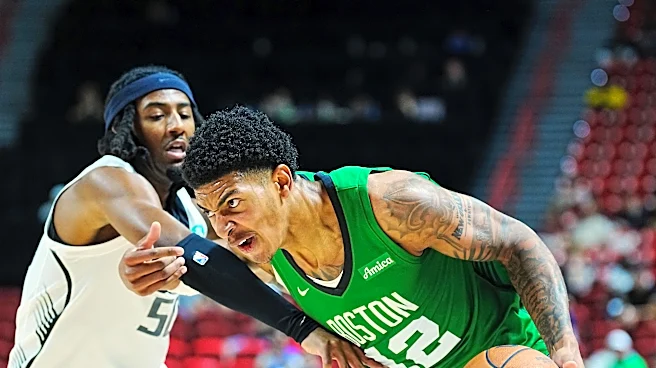
The Boston Celtics have a rich history of drafting players from various colleges, including Princeton University. Over the years, several Princeton alumni have been selected by the Celtics during the NBA draft. Notable among them are Ed Hummer, drafted
in the 6th round of the 1967 NBA Draft, and Kevin Mullin, picked in the 4th round of the 1984 NBA Draft. Despite being drafted, neither player made the team. The Celtics have historically built their roster through the draft, acquiring top talent either directly or through trades made on draft night. This approach has been a cornerstone of their team-building strategy, contributing significantly to their success over the decades.
Why It's Important?
The drafting of players from diverse educational backgrounds, including Ivy League schools like Princeton, highlights the Celtics' commitment to scouting talent from a wide range of institutions. This strategy not only enriches the team's roster but also underscores the importance of the NBA draft in shaping the future of franchises. By selecting players from various colleges, the Celtics demonstrate a broad scouting approach that can lead to discovering hidden gems. This method has been instrumental in maintaining the team's competitive edge and ensuring a steady influx of talent, which is crucial for long-term success in the league.
What's Next?
As the Celtics continue to leverage the NBA draft for team-building, they may explore new strategies to maximize the potential of drafted players. This could involve enhanced training programs or strategic trades to integrate new talent effectively. The team's management might also focus on improving scouting techniques to identify players who can make an immediate impact. Additionally, the Celtics could consider expanding their scouting network to include international prospects, further diversifying their talent pool and strengthening their roster for future seasons.
Beyond the Headlines
The Celtics' drafting strategy reflects broader trends in the NBA, where teams increasingly value versatility and diverse skill sets. By drafting players from schools like Princeton, the Celtics contribute to a culture of inclusivity and recognition of talent beyond traditional basketball powerhouses. This approach may inspire other teams to adopt similar strategies, fostering a more dynamic and competitive league. Furthermore, the emphasis on drafting from varied educational backgrounds can encourage young athletes to pursue higher education, knowing that their academic achievements are valued alongside their athletic prowess.