





What's Happening?
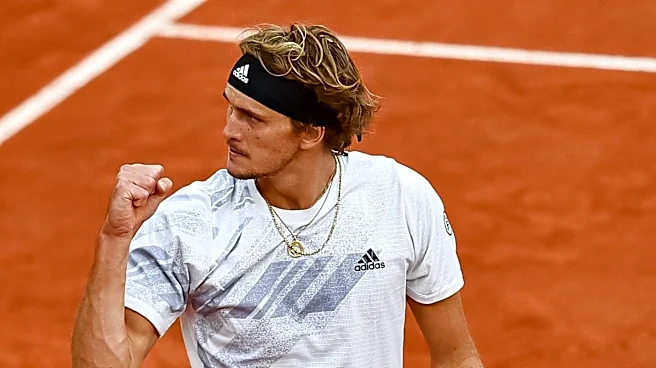
Alexander Zverev has reached the pinnacle of men's tennis, claiming the world number one ranking after years of anticipation. The 29-year-old German will officially take over from Jannik Sinner, becoming the 30th man to achieve this feat since rankings
were introduced in 1973. Zverev's ascent follows a season where he capitalized on injuries to key rivals and elevated his own game, securing titles at the French Open and US Open, and reaching the Wimbledon final. His career has been marked by significant achievements, including two ATP Finals titles and an Olympic gold medal in 2021, but Grand Slam success had eluded him until this year. Zverev's journey to the top has also involved overcoming a serious ankle injury sustained at the 2022 French Open and navigating off-court turbulence related to domestic abuse allegations, which he has consistently denied. A German court closed a case involving his former partner Brenda Patea after a 2024 settlement without a finding of guilt, and the ATP concluded a separate investigation in 2023 citing insufficient evidence.
Why It's Important?
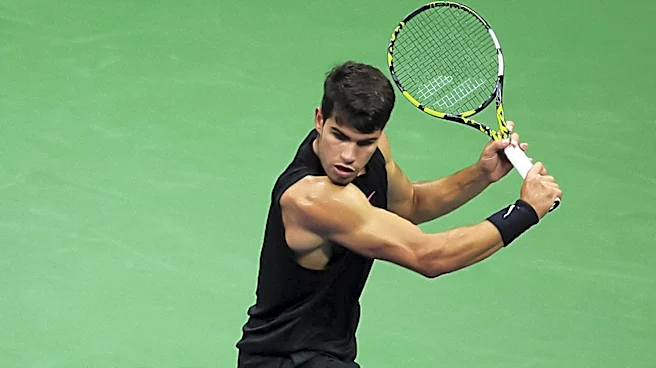
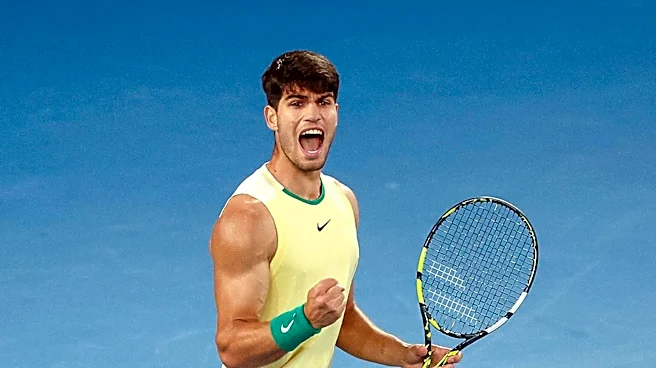
Zverev's rise to world number one signifies a significant shift in the landscape of men's tennis, marking a new era beyond the dominance of the 'Big Four' (Federer, Nadal, Djokovic, Murray) and the emerging 'new generation' of Sinner and Alcaraz. His achievement highlights the importance of consistency, durability, and perseverance in a highly competitive sport, especially given his past injury setbacks and personal challenges. For U.S. tennis fans and the sport globally, Zverev's top ranking introduces a new dynamic, potentially fueling rivalries with other top players like Carlos Alcaraz and Jannik Sinner. His success also serves as an inspiration, demonstrating that sustained effort and adaptation can lead to ultimate success even later in a player's career. As a prominent figure in the sport, Zverev's position as world number one will bring increased scrutiny and responsibility, influencing the sport's narrative and potentially inspiring a new generation of players.
What's Next?
As the new world number one, Zverev will face the challenge of maintaining his top ranking against strong competitors like Carlos Alcaraz and Jannik Sinner, who are expected to return to full form. His performance in upcoming tournaments will be closely watched to see if he can solidify his position as the sport's leading player. Zverev has expressed that reaching number one later in his career has better prepared him for the responsibilities that come with the ranking, including being a role model. He will need to continue demonstrating exceptional tennis skills and mental fortitude to fend off challengers. The tennis season will likely see intense competition as other top players aim to reclaim or achieve the number one spot, setting the stage for compelling matchups and rivalries in major tournaments. His ability to manage the pressures of being the sport's top player, both on and off the court, will be a key factor in his continued success.
Beyond the Headlines
Zverev's journey to world number one offers a compelling narrative about resilience and the complex pressures faced by elite athletes. His public battles with injury and off-court allegations highlight the intense scrutiny and personal challenges that can accompany professional sports careers. His ability to compartmentalize and perform at the highest level despite these adversities speaks to a profound mental toughness. Furthermore, his success at 29, after years of being considered a top talent but not quite reaching the summit, challenges the notion that younger players always dominate. It underscores the value of experience and strategic game evolution. His story also brings into focus the evolving nature of professional tennis, where physical conditioning and injury management are as crucial as raw talent. Zverev's reign at the top will undoubtedly be a test of his enduring capabilities and his capacity to lead the sport into its next chapter.