



What's Happening?
ExxonMobil's rapid expansion in offshore Guyana, led by Chief Executive Officer Darren Woods since 2017, is reportedly drawing major oil companies back to drilling in underexplored areas. The Financial Times reported on November 17 that this resurgence
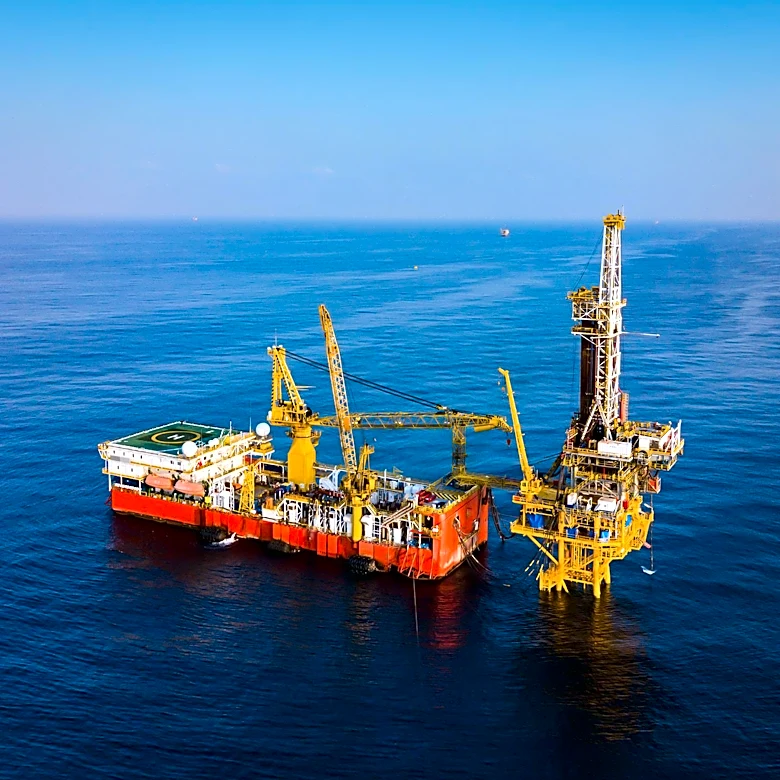
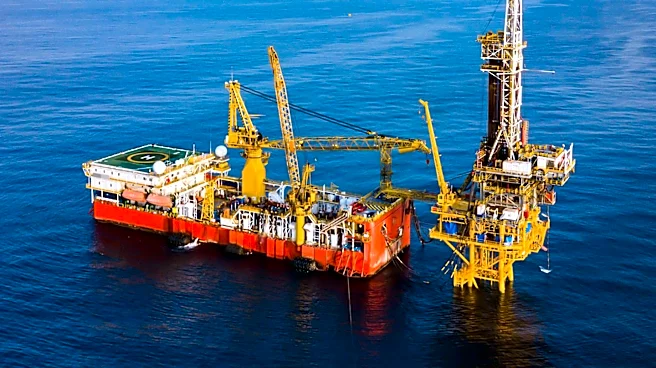
follows ExxonMobil's November 16 announcement of the Uaru project's production startup, its fifth offshore development in Guyana. This development has increased Guyana’s installed oil production capacity to 1.1 million barrels per day. The ExxonMobil-led consortium has invested over US$50 billion in Guyana, commencing oil production from the Stabroek Block in 2019, approximately 120 miles off the coast. Analysts, including Schreiner Parker from Rystad Energy, highlight Guyana as a crucial pillar of ExxonMobil's global upstream growth strategy, providing access to a large, low-cost resource at a time when the company was re-evaluating investment priorities.
Why It's Important?
This development signifies a notable shift in the global oil industry, particularly for U.S. oil majors. For years, many major oil companies had scaled back frontier drilling due to concerns that the energy transition might render some oil and gas assets undeveloped. ExxonMobil's success in Guyana, under Darren Woods' leadership, demonstrates that significant, low-cost resources can still be found and profitably developed, even amidst global energy transition discussions. This success has encouraged other companies, such as Chevron, to increase their exploration budgets and pursue new opportunities in regions like Suriname, Argentina, Venezuela, and Brazil. The increased investment and production in these areas, particularly in North and South America, could contribute to global oil supply stability and potentially influence international oil prices, impacting U.S. consumers and industries reliant on petroleum products.
What's Next?
The success of ExxonMobil's Guyana operations is expected to continue attracting further investment and exploration efforts from other major oil companies in frontier regions. Chevron, for instance, has already increased its 2026 exploration budget by over 50% from 2025 and acquired a 30% stake in the Stabroek Block through its US$53 billion acquisition of Hess. This indicates a potential trend of renewed interest in expanding oil reserves and production capacity among U.S. and international oil giants. Rystad Energy projects that combined oil output across North and South America will rise by 10% over the two years leading up to December 2026. This anticipated growth suggests a continued focus on maximizing hydrocarbon resources, which could have long-term implications for energy markets and the strategic positioning of major oil companies.
Beyond the Headlines
The renewed focus on frontier drilling, spurred by ExxonMobil's success in Guyana, presents a complex interplay of economic, environmental, and geopolitical considerations. While it offers significant economic benefits through job creation, investment, and increased energy supply, it also raises questions about the long-term commitment to renewable energy and climate change mitigation efforts. The substantial investments in new oil and gas projects could lock in fossil fuel dependency for decades, potentially conflicting with global climate goals. Furthermore, the development of large offshore reserves in politically sensitive regions like Guyana could have geopolitical implications, influencing regional stability and international relations as nations vie for energy security and resource control. The ethical dimension of pursuing new fossil fuel sources amidst a global climate crisis will likely remain a contentious issue.