






What's Happening?
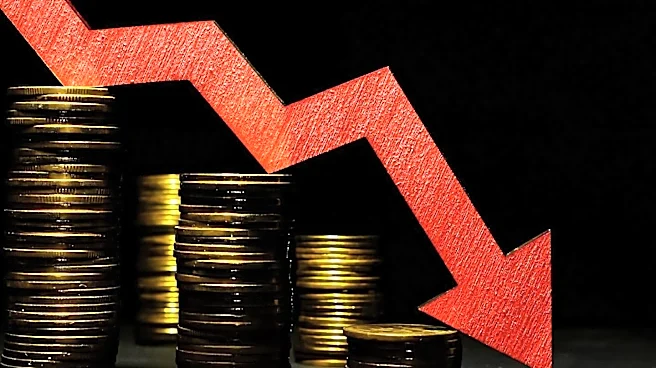
Investors are actively preparing for a potential recession, driven by several key economic indicators. The U.S. economy has experienced the longest inverted yield curve in history, a phenomenon where shorter-dated bonds yield more than longer-dated ones,
which has historically been a reliable precursor to a recession. Despite robust economic activity, partly fueled by the build-out of artificial intelligence (AI), the Federal Reserve has been hiking interest rates since 2022 to curb elevated inflation. This tightening monetary policy, coupled with rampant affordability issues across the U.S., is contributing to investor caution. While there are no immediate signs of a recession, the historical accuracy of the inverted yield curve as a predictor is prompting investors to take proactive measures to protect their portfolios.
Why It's Important?
The sustained inverted yield curve is a significant warning sign for the U.S. economy, as it reflects market expectations of future economic slowdowns and potential interest rate cuts by the Federal Reserve. This historical correlation makes it a critical indicator for investors and policymakers alike. The Federal Reserve's continued interest rate hikes, aimed at combating inflation, carry the risk of over-tightening and pushing the economy into a recession, especially when combined with existing affordability challenges for consumers. These affordability issues, such as rising housing costs and general living expenses, can dampen consumer spending, a major driver of economic growth. The combination of these factors creates a challenging economic environment where investors are compelled to re-evaluate their strategies to mitigate potential losses and position themselves for future opportunities during a downturn.
What's Next?
Investors are advised to consider strategies such as raising cash reserves and scrutinizing their portfolios. Raising cash provides a defensive buffer against market volatility and offers liquidity to capitalize on potential buying opportunities if a recession leads to lower asset valuations. Portfolio scrub-downs involve examining individual stocks, exchange-traded funds, and index funds to identify holdings with elevated valuations or those whose investment theses have changed. This includes considering tax loss harvesting, where capital losses are used to offset capital gains, and strategically selling long-term holdings to benefit from lower tax rates. The market will continue to monitor the Federal Reserve's actions regarding interest rates and inflation, as well as broader economic data related to consumer spending and affordability, for further indications of the economy's direction.
Beyond the Headlines
The current economic climate highlights a broader tension between technological advancement and traditional economic cycles. While AI development is driving some economic activity, the underlying structural issues like affordability and the impact of monetary policy on the broader economy remain critical. The focus on an inverted yield curve as a recession predictor underscores the enduring relevance of classical economic indicators even in an era of rapid technological change. This situation also brings to light the psychological aspect of investing, where historical patterns heavily influence current decisions, even when new variables like AI are at play. The proactive measures taken by investors reflect a growing awareness of systemic risks and a shift towards more cautious and strategic financial planning in anticipation of potential economic turbulence, emphasizing resilience over speculative growth.