





What's Happening?
Dixon Valve, an American manufacturer of fluid transfer and control products based in Chestertown, MD, has adopted automation to enhance its manufacturing processes. The company, founded in 1916, previously operated two separate production lines for male
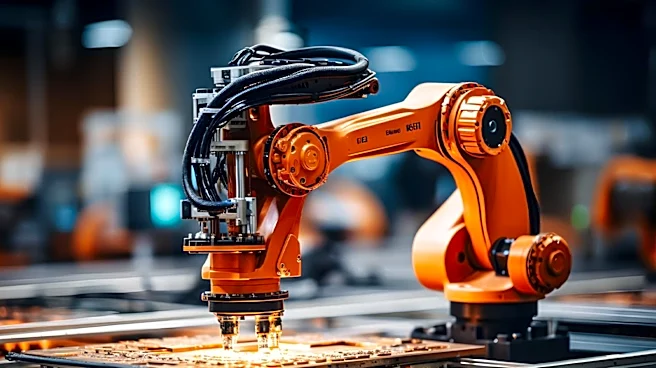
and female valves. To maximize efficiency, reduce operating costs, and increase flexibility, Dixon Valve merged these lines into a single automated system. This strategic move addresses challenges such as aging manufacturing equipment, frequent downtime, and difficulties in finding skilled labor. The new system, engineered by Eclipse Automation, is designed to assemble over 20 part types, handling the complexity of metal valves with shiny surfaces and small components, which typically pose difficulties for vision systems. This automation allows Dixon Valve to switch between male and female valve production based on demand, aiming to improve its competitive edge against low-cost international manufacturers.
Why It's Important?
This automation initiative by Dixon Valve is significant for the U.S. manufacturing sector, particularly in the industrial valve market. The global market for industrial valves was approximately $73.9 billion in 2025 and is projected to reach $149.1 billion by 2035, driven by increasing demand from water and energy projects. By investing in advanced manufacturing technology, Dixon Valve is positioning itself to compete more effectively against international rivals, especially those offering ISO-certified products at lower costs. The ability to produce the same quantity of valves in half the time effectively doubles the company's capacity and provides greater agility to adapt to market demand changes. This move helps retain manufacturing jobs in the U.S. and demonstrates how American companies can leverage technology to overcome labor shortages and operational inefficiencies, ensuring their viability in a highly competitive global landscape.
What's Next?
Following the implementation of the new automated manufacturing line, Dixon Valve is expected to continue realizing significant improvements in throughput and production volume. The increased efficiency and flexibility will allow the company to better capitalize on growth opportunities, particularly in the OEM market. The success of this automation project may serve as a model for other American manufacturers facing similar challenges, potentially encouraging broader adoption of advanced manufacturing technologies across various industries. The company will likely focus on optimizing the new system further and exploring additional automation opportunities to maintain its competitive advantage and meet the projected growth in the industrial valve market over the next decade.
Beyond the Headlines
The automation adopted by Dixon Valve highlights a broader trend in U.S. manufacturing: the strategic shift towards technology-driven solutions to address economic pressures and labor market dynamics. While automation can raise concerns about job displacement, in this context, it appears to be a critical factor in sustaining and growing an American manufacturing company in a globalized market. The ability to produce high-quality products efficiently and cost-effectively through automation can strengthen domestic supply chains and reduce reliance on foreign manufacturing. This development also underscores the importance of engineering and systems integration expertise, as demonstrated by Eclipse Automation, in designing complex systems that can handle diverse product specifications and challenging materials. It reflects a long-term industrial strategy where technological innovation is key to economic resilience and competitiveness.