






What's Happening?
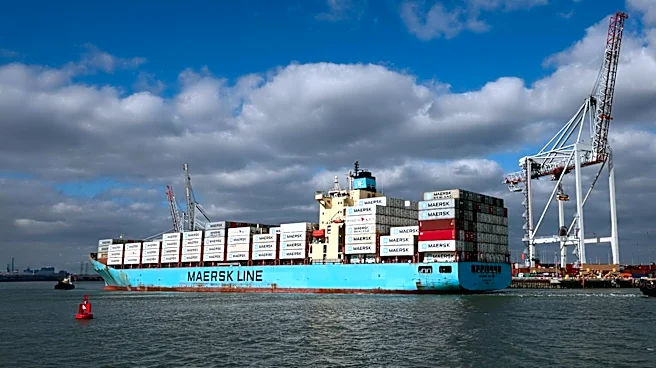
Seaspan, a major vessel owner, has partnered with Maersk to launch a significant vessel upgrade program aimed at enhancing the efficiency of their fleet. The initiative involves a commitment of at least $75 million to upgrade 18 vessels that are under
long-term charters to Maersk. The program focuses on improving fuel efficiency, cargo capacity, operational flexibility, and reducing emissions. Key upgrades include the installation of a shaft generator to cut auxiliary engine fuel consumption, optimization of main engine performance, and the addition of a high-efficiency propeller. These measures are expected to improve the vessels' slot cost by 10-13%, while also preparing them for future emissions regulations. Additionally, the lashing bridge will be elevated to increase cargo capacity, and the deadweight will be enhanced to improve loading capabilities.
Why It's Important?
This upgrade program is crucial as it represents a proactive approach by ship owners and operators to address upcoming regulatory challenges and rising operational costs. By enhancing the efficiency of their vessels, Seaspan and Maersk aim to remain competitive in the maritime industry, which is increasingly focused on sustainability and cost-effectiveness. The improvements in fuel efficiency and emissions reduction align with global efforts to decarbonize the shipping industry, which is a significant contributor to greenhouse gas emissions. The program also highlights the importance of innovation and collaboration in achieving these goals, as seen in the partnership with WattSpan for maritime decarbonization technologies.
What's Next?
The vessel upgrade program is part of a broader trend in the maritime industry towards sustainability and efficiency. As regulatory pressures increase, more shipping companies are likely to invest in similar upgrades to meet emissions standards and reduce operational costs. The collaboration between Seaspan, Maersk, and WattSpan may serve as a model for future partnerships aimed at enhancing vessel performance and environmental compliance. Additionally, the success of this program could encourage further investments in alternative fuel technologies, such as methanol dual-fuel capabilities, which Maersk has already begun exploring.