





What's Happening?
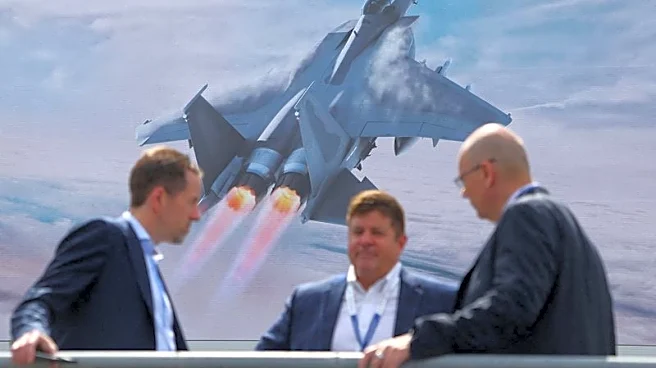
At the Farnborough air show, a panel on sustainable aviation fuel (SAF) financing highlighted the urgent need for increased investment in SAF projects to meet the aviation industry's 2050 net-zero emissions goal. The panelists noted that approximately
200 SAF projects worldwide are struggling to scale up due to a lack of long-term offtake agreements, which are crucial for guiding these projects through the 'valley of death'—a critical period where projects are vulnerable to failure without sufficient financial backing. Recent policy changes, such as the European Commission's proposal to expand its emissions trading system, have deterred airlines from committing to these agreements. Jennifer Holmgren, CEO of SAF producer LanzaTech, emphasized the slowdown in airlines' willingness to commit to long-term agreements, citing increased fuel costs and policy uncertainties as contributing factors.
Why It's Important?
The development and scaling of SAF are vital for the aviation industry to achieve its long-term sustainability targets. Without significant investment and commitment from airlines, the industry risks falling short of its 2050 net-zero emissions goal. The reluctance to enter long-term agreements could stall progress, impacting not only environmental goals but also the economic viability of SAF projects. The panelists stressed the need for incentivization and supportive policy environments to attract investment and drive growth in the SAF sector. The involvement of major industry players like Airbus and Air Canada, who announced a joint investment in Canada's SAF industry, underscores the importance of collaborative efforts to overcome these challenges.
What's Next?
The panelists called for more airlines to follow the example of companies like IAG, which has already signed long-term SAF offtake deals and participates in investment funds aimed at scaling SAF development. The industry is looking to close a second round of funding for these initiatives later this year. Additionally, government bodies like UK Export Finance are working to create favorable conditions for investment in the SAF sector. The ongoing dialogue between industry leaders and policymakers will be crucial in shaping the future of sustainable aviation fuel and ensuring the industry's alignment with global environmental targets.