



What's Happening?
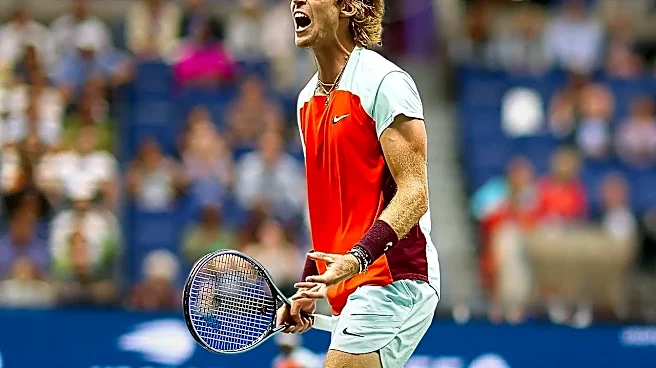
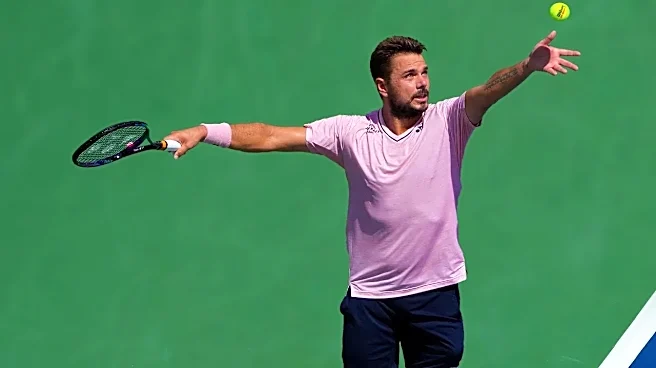
American tennis player Ben Shelton has voiced strong support for the newly announced Grand Slam Player Advisory Council. This council, a joint initiative by the Australian Open, French Open, Wimbledon, and US Open, aims to provide players with a formal
platform to contribute to discussions and decisions impacting major tournaments. Shelton emphasized that this council is a long-desired development, offering players a genuine opportunity to have their voices heard and to help shape the future of Grand Slam events beyond on-court play. The council is expected to address various issues, including prize money, and is slated to be launched following the year's final Grand Slam in August. Deborah Jevans, President of the All England Club, stated that the creation of this advisory body represents a significant step towards fostering a closer relationship between Grand Slam tournaments and the players.
Why It's Important?
The establishment of the Grand Slam Player Advisory Council marks a significant shift in the governance and player relations within professional tennis. For U.S. players like Ben Shelton, and indeed all professional tennis players, this council offers a formalized channel for advocacy on critical issues such as prize money distribution, tournament conditions, scheduling, and player welfare. Historically, players have often felt marginalized in decision-making processes, leading to occasional disputes and calls for greater representation. This initiative could lead to more equitable prize money structures, improved playing conditions, and policies that better reflect the needs and concerns of athletes. It could also foster greater transparency and collaboration between players and tournament organizers, potentially reducing conflicts and enhancing the overall integrity and appeal of Grand Slam events. The success of this council could set a precedent for other professional sports leagues to adopt similar player-centric governance models.
What's Next?
The Grand Slam Player Advisory Council is scheduled to be launched after the US Open in August. In the interim, the Grand Slam tournaments are actively engaging with players to determine the composition and operational modalities of the council. Players interested in participating will have the opportunity to apply for positions on the council. Following its establishment, the council will begin its work by addressing key player concerns, with prize money being a prominent topic. The initial meetings and proposals from the council will be closely watched by players, media, and the broader tennis community to assess its effectiveness and influence. The long-term impact will depend on the commitment of both players and tournament organizers to engage constructively and implement meaningful changes based on the council's recommendations.
Beyond the Headlines
Beyond the immediate concerns of prize money and tournament logistics, the creation of the Grand Slam Player Advisory Council carries deeper implications for the professional sports landscape. It signifies a growing recognition of athletes as key stakeholders whose input is crucial for the sustainable growth and ethical governance of their respective sports. This move could empower players to advocate for broader issues such as mental health support, anti-doping policies, and fair representation in media and sponsorship deals. It also highlights a potential shift towards a more collaborative model of sports management, where the voices of those directly involved in the competition are integrated into strategic decision-making. This could lead to a more athlete-centric approach across professional sports, fostering greater trust and mutual respect between players and governing bodies, and ultimately enhancing the sport's appeal to fans by ensuring its integrity and fairness.