




What's Happening?
Boeing CEO Kelly Ortberg is leading a turnaround effort for the aerospace company, which has faced significant challenges due to quality-control breakdowns and supply-chain issues. The company's stock has fallen considerably since its peak in early 2019.
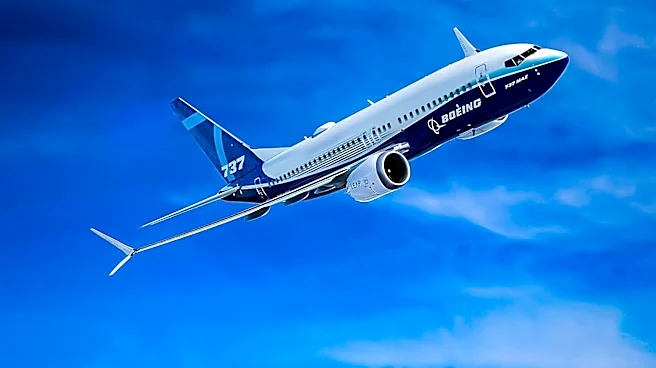
In 2024, Ortberg was brought in to address these problems, initiating major changes to improve quality control and supply chains, including the acquisition and reintegration of Spirit AeroSystems, which Boeing had spun off in 2005. Boeing has also secured an amended type certification for its 737 MAX 7 and 737 MAX 10 aircraft, resolving a regulatory hurdle. However, due to ongoing supply-chain issues, Boeing informed investors that it would not meet its 737 delivery goal of 500 aircraft and has postponed its target of producing 47 jets per month to 2027, a delay from the previously aimed summer 2026. Despite these setbacks, management still anticipates reaching a production rate of 52 jets per month later next year. Additionally, Ortberg recently pushed back the company's $10 billion free cash flow goal to 2029, which led to a sell-off in Boeing stock as investors reacted to the extended timeline.
Why It's Important?
Boeing's ongoing struggles and the extended timeline for its turnaround have significant implications for the U.S. aerospace industry and its investors. As a major U.S. manufacturer and exporter, Boeing's performance impacts numerous suppliers, employees, and the broader economy. The delays in aircraft deliveries affect airlines globally, potentially leading to fleet expansion issues and operational challenges. For investors, the repeated setbacks, particularly the delay in achieving the $10 billion free cash flow target, signal continued volatility and uncertainty. While the stock is currently priced cheaply relative to its peers and historical valuation, the extended recovery period may deter shorter-term investors. The company's ability to successfully reintegrate Spirit AeroSystems and resolve its quality control issues is crucial for restoring confidence in its manufacturing processes and product reliability, which are paramount for safety and market competitiveness. The situation highlights the complexities of managing a large-scale manufacturing operation with intricate global supply chains and stringent regulatory oversight.
What's Next?
Boeing will continue its multi-year turnaround effort under CEO Kelly Ortberg, focusing on improving quality control and stabilizing its supply chains. The company aims to increase its 737 production rate to 52 jets per month next year, despite the current delay in reaching the 47-jet target until 2027. Investors will closely monitor progress on these production goals and the effectiveness of the reintegration of Spirit AeroSystems. The market will also be watching for any further updates on the revised $10 billion free cash flow target, now set for 2029. Future earnings calls and investor updates will provide more clarity on the company's operational improvements and financial performance. The successful execution of these plans is critical for Boeing to regain investor confidence and stabilize its market position. Any further delays or quality control issues could lead to additional stock volatility and increased scrutiny from regulators and customers.
Beyond the Headlines
The challenges faced by Boeing extend beyond immediate financial and production metrics, touching upon deeper issues of corporate governance, engineering culture, and the long-term health of the U.S. industrial base. The decision to reacquire Spirit AeroSystems, after spinning it off, underscores the complexities and potential pitfalls of outsourcing critical manufacturing components, especially in an industry where precision and safety are paramount. This move could signal a broader trend in aerospace manufacturing towards greater vertical integration to ensure quality control. Furthermore, the prolonged turnaround period raises questions about the effectiveness of past management strategies and the systemic issues that led to repeated quality control problems. The company's ability to rebuild trust with regulators, airlines, and the flying public will depend not just on meeting production targets but also on demonstrating a sustained commitment to safety and quality, potentially influencing future regulatory frameworks and industry best practices for aerospace manufacturing.