






What's Happening?
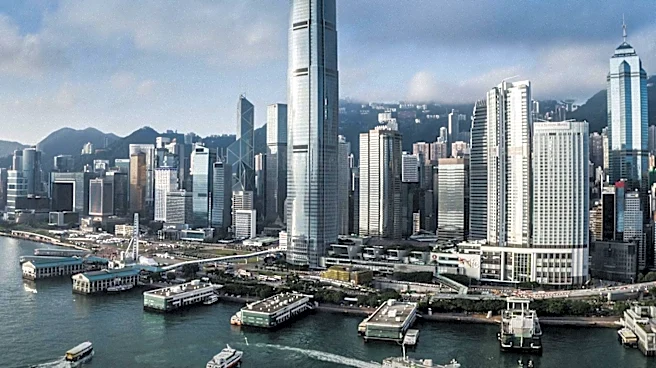
Global financial leaders gathered in Hong Kong this week largely avoided open discussions about Beijing’s intensified scrutiny of wealthy families’ offshore assets. Despite this being a significant near-term challenge for the city’s wealth management
industry, the topic was barely addressed at major events such as the Global Financial Leaders’ Investment Summit and the PWMA Wealth Management Industry Summit 2026. Instead, industry heavyweights focused their discussions on Hong Kong’s appeal as an alternative safe haven amidst global market volatility and its growing strength as a cross-border wealth hub. Beijing’s move earlier this year to increase oversight of overseas assets held by wealthy families remains a sensitive issue for cross-border wealth management, yet it was not a central point of public discourse during these high-profile financial gatherings.
Why It's Important?
The deliberate sidestepping of Beijing's asset scrutiny by global financial leaders highlights a cautious approach to sensitive political and economic issues within Hong Kong's financial sector. While Hong Kong aims to project an image of stability and growth as a wealth management hub, the underlying concerns about capital controls and regulatory oversight from mainland China persist. This dynamic suggests that financial institutions and their leaders are navigating a delicate balance: promoting Hong Kong's attractiveness while being mindful of Beijing's increasing influence. The focus on Hong Kong as a 'safe haven' amidst global volatility indicates its continued importance as a financial center, but the unspoken issue of asset scrutiny could impact long-term confidence and the flow of wealth, particularly from mainland China, if not addressed transparently.
What's Next?
Despite the public silence at these summits, the issue of Beijing's asset scrutiny will likely continue to be a significant factor in private discussions and strategic planning within the wealth management industry in Hong Kong. Financial institutions will need to adapt to evolving regulatory landscapes and potential capital outflow restrictions from mainland China. Future financial summits in Hong Kong may face increasing pressure to address these issues more directly, especially if Beijing's oversight intensifies. The city's ability to maintain its status as a premier wealth management hub will depend on how effectively it can balance its unique position as a gateway to China with the need for regulatory clarity and investor confidence, particularly for international clients concerned about asset security and privacy.
Beyond the Headlines
The reluctance of financial leaders to openly discuss Beijing's asset scrutiny points to a broader trend of self-censorship and political sensitivity within Hong Kong's business environment. This silence, while perhaps pragmatic in the short term, could erode transparency and trust in the long run, potentially impacting Hong Kong's reputation as a free and open financial market. The increasing integration of Hong Kong's financial system with mainland China's regulatory framework presents a complex challenge for wealth managers who traditionally relied on the city's distinct legal and financial autonomy. This situation could lead to a re-evaluation of risk by ultra-high-net-worth individuals and family offices, potentially influencing their decisions on where to domicile their assets and conduct their financial affairs, thereby shaping the future landscape of global wealth management.