


What's Happening?
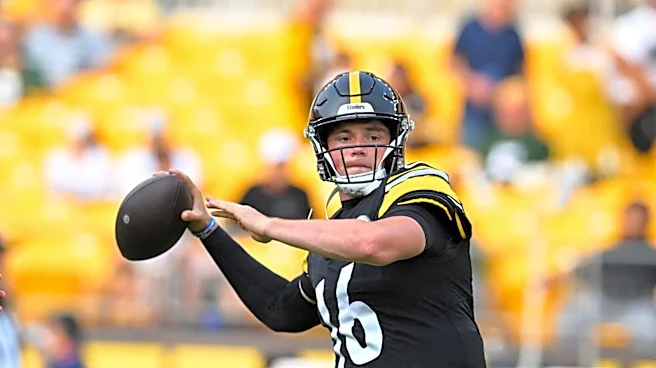
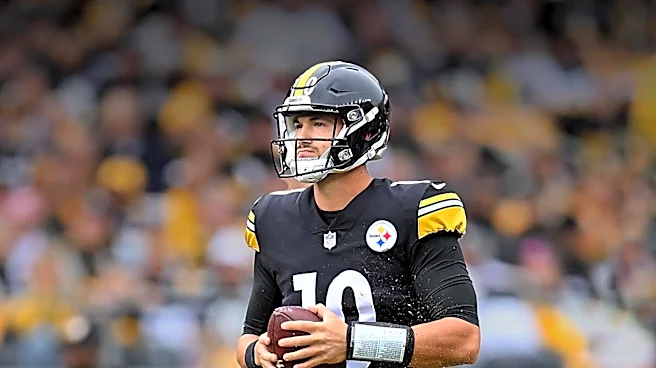
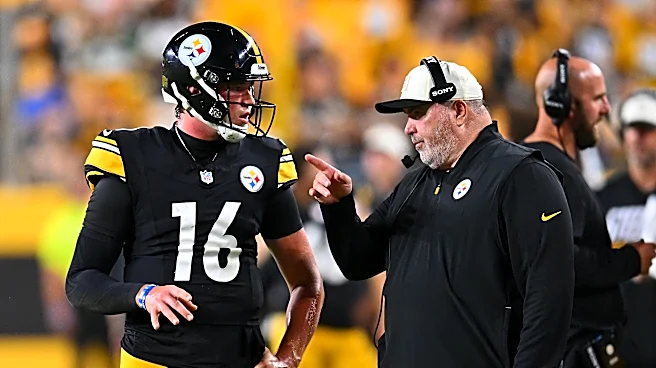
The Pittsburgh Steelers are not planning to trade backup offensive tackle Broderick Jones or quarterback Mason Rudolph, despite upcoming roster cutdowns, according to Gerry Dulac. With less than two weeks until 90-man rosters are trimmed to 53 across
the NFL, the Steelers face difficult decisions due to a tight roster. The possibility of keeping four quarterbacks and the unexpected return of Broderick Jones at the start of training camp have further complicated roster construction. Dulac indicated that while general manager Omar Khan has a history of making trades, moving Jones or Rudolph is not currently in the team's plans. Rudolph is considered the only realistic trade candidate among the backup quarterbacks, but Dulac suggests he would likely only command a sixth-round pick. Jones, who is still recovering from spinal fusion surgery less than a year ago, is valued for his versatility as a swing tackle capable of playing both sides of the offensive line.
Why It's Important?
This decision highlights the Steelers' strategic approach to roster depth, particularly at critical positions like offensive tackle and quarterback. Retaining Broderick Jones, despite his recent surgery and ongoing recovery, underscores the team's emphasis on offensive line stability and future potential. His ability to play both tackle positions provides valuable flexibility and insurance against injuries to starters. Similarly, keeping Mason Rudolph, even with other quarterbacks on the roster, suggests the Steelers prioritize experienced backup leadership, especially given the potential for injuries to starting quarterbacks in the NFL. This approach minimizes the risk of having an inexperienced player step into a crucial role, which could significantly impact the team's performance and playoff aspirations. The Steelers' reluctance to trade these players for potentially low draft compensation indicates they value their current contributions and future development more than immediate draft capital.
What's Next?
As roster cutdowns approach, the Steelers will continue to evaluate their 90-man roster to reach the 53-player limit. While Dulac reports no current intention to trade Jones or Rudolph, the situation could change if another team offers a compelling deal that is difficult to refuse. The team will monitor Jones's progress in regaining full strength and adding weight, as he admitted after the preseason opener that he still needs to improve his physical condition. For Rudolph, his role as a backup quarterback will be solidified, providing an experienced option should the starting quarterback face an injury. The Steelers' final roster decisions will be closely watched, as they aim to balance veteran experience with emerging talent to build a competitive team for the upcoming season.
Beyond the Headlines
The Steelers' decision reflects a broader NFL trend where teams increasingly prioritize depth and versatility, especially at positions prone to injury or requiring specialized skills. The value placed on a player like Broderick Jones, who can play multiple offensive line spots, illustrates the strategic advantage of having adaptable players. Furthermore, the cautious approach to trading players recovering from significant injuries, such as Jones's spinal fusion surgery, highlights the long-term investment teams make in their athletes and the potential risks associated with their health. The reluctance to trade Rudolph for a low draft pick also speaks to the perceived scarcity of reliable backup quarterbacks in the league, where an experienced signal-caller can be crucial for a team's success if the starter is sidelined. This strategy underscores a commitment to stability and preparedness over short-term gains from minor trades.