







What's Happening?
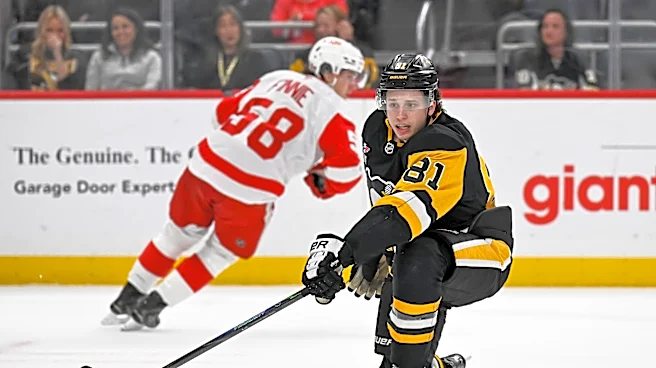
The Pittsburgh Penguins have decided not to re-sign Anthony Mantha, a free agent, despite having significant cap space and a roster focused on immediate success. According to Pierre LeBrun from The Athletic, the Penguins were only willing to offer Mantha a one-year
contract, which was not sufficient for the player and his agent, Olivier Fortier. Mantha, who is 31 years old, is now expected to seek a longer-term deal, potentially spanning four years, with an annual salary between $5 million and $6 million. Mantha had a productive season with the Penguins, scoring a career-high 33 goals, but his history of injuries has been a concern. The decision not to retain Mantha suggests the Penguins are looking to balance their current competitive aspirations with future roster planning, especially considering the contracts of key players like Evgeni Malkin and Sidney Crosby, which expire at the end of the 2026-27 season.
Why It's Important?
This decision by the Penguins highlights the challenges teams face in managing player contracts while maintaining competitive performance. By not re-signing Mantha, the Penguins are potentially losing a significant offensive contributor, which could impact their performance in the upcoming season. However, this move also reflects a strategic decision to prepare for a future rebuild, as key players like Malkin and Crosby approach the end of their contracts. The Penguins' choice not to offer a longer-term deal to Mantha may also influence other teams in the league, as they assess the value and risk of signing a player with a history of injuries. For Mantha, this opens up opportunities to secure a more lucrative and stable contract with another team, potentially enhancing his career prospects.
What's Next?
As Mantha enters the free agent market, he is likely to attract interest from teams in need of goal-scoring talent, especially given the limited availability of such players in the current market. The Penguins, on the other hand, will need to find a replacement for Mantha's productivity, either through trades, free agency, or developing younger talent. The team's management will also need to consider long-term strategies for maintaining competitiveness as they approach a potential rebuild phase post-2026-27. The decisions made in the coming months will be crucial for the Penguins' future trajectory in the NHL.