




What's Happening?
Ecuador, a South American nation, presents a wide array of travel opportunities, from the unique wildlife of the Galapagos Islands to the cultural richness of its mainland. The country utilizes the US dollar as its official currency, a factor that simplifies
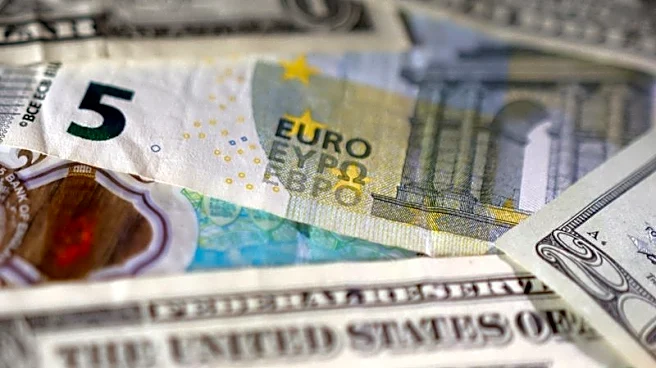
financial transactions for American visitors. Key attractions include the Galapagos, known for its fearless wildlife such as sea lions and blue-footed boobies, and the mainland's diverse landscapes, which encompass the colonial capital of Quito, the cloud forests of Mindo, and the Amazon rainforest. Quito, situated at 9,000 feet, offers historical sites and proximity to volcanoes like Cotopaxi. The country is also home to the largest indigenous market in South America, located in Otavalo. Travel logistics within Ecuador are facilitated by its compact size, allowing for varied experiences within a short travel time. The country's use of the US dollar since 2000 eliminates currency exchange complexities for American travelers.
Why It's Important?
Ecuador's adoption of the US dollar significantly benefits American tourists, remote workers, and retirees by removing currency conversion hassles and exchange rate risks, making financial planning straightforward. This economic stability, coupled with the country's diverse offerings, positions Ecuador as an attractive destination for various demographics. For families, the Galapagos Islands provide unparalleled wildlife encounters, while the mainland offers adventure, cultural immersion, and natural beauty at a more accessible price point compared to some neighboring countries. The country's compact geography allows for efficient travel between distinct ecological zones, maximizing the value of a trip. The blend of unique natural environments, rich cultural heritage, and economic convenience makes Ecuador a notable option for those seeking diverse international travel experiences.
What's Next?
Travelers considering Ecuador can anticipate continued accessibility due to the US dollar currency. Future developments may focus on enhancing tourist infrastructure in less-visited mainland regions like Mindo and Banos, which offer unique experiences such as cloud forest exploration and adventure sports. The ongoing preservation efforts in the Galapagos Islands will likely maintain strict regulations to protect its delicate ecosystem, ensuring its long-term appeal as a premier wildlife destination. For those planning trips, it is advisable to monitor regional security advisories, particularly for coastal areas, while major tourist hubs like Quito, Cuenca, and the Galapagos generally remain unaffected. The country's commitment to sustainable tourism could also lead to more community-based tourism initiatives, particularly in the Amazon, offering more authentic cultural interactions.
Beyond the Headlines
Ecuador's unique position on the equator and its diverse ecosystems present profound ecological and cultural significance. The Galapagos Islands, a UNESCO World Heritage site, continue to serve as a living laboratory for evolutionary biology, drawing researchers and conservationists worldwide. The mainland's cultural tapestry, woven from indigenous, Afro-Ecuadorian, and Amazonian communities, offers a rich field for anthropological study and cultural exchange. The economic decision to adopt the US dollar, while simplifying tourism and trade, also links Ecuador's economy directly to US monetary policy, with broader implications for its financial stability and inflation control. This economic integration, combined with its natural and cultural wealth, positions Ecuador as a fascinating case study in globalization, conservation, and cultural preservation in the 21st century.