



What's Happening?
Since 2022, five cultivated meat products have undergone the regulatory process with the U.S. Food and Drug Administration (FDA) and the U.S. Department of Agriculture (USDA), according to Elliot Swartz, senior principal scientist at the Good Food Institute.
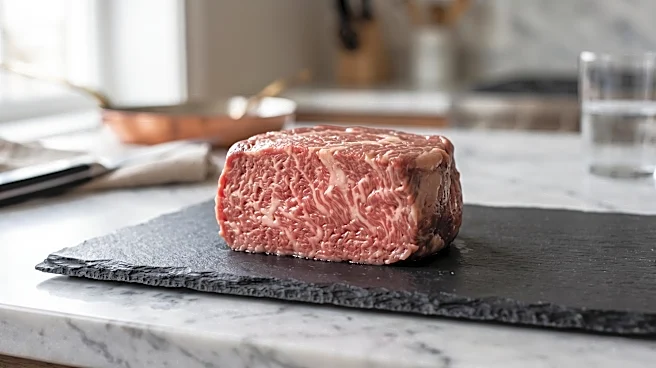
These products have successfully cleared the safety evaluations conducted by the FDA. However, most of these products are no longer available for sale, or have never been sold, despite their approval. Currently, the only cultivated meat product on the U.S. market is a cultivated salmon product from Wildtype, which is available in five restaurants nationwide. Swartz emphasized that cultivated meat products are not yet available in grocery stores and that it will take considerable time for this to change. He also clarified that any cultivated meat product introduced to consumers would be federally regulated and require clear labeling, dispelling social media claims about unlabeled lab-grown meat appearing in supermarkets. The USDA federally reviews labels before products can reach consumers.
Why It's Important?
The stringent regulatory oversight by the FDA and USDA for cultivated meat products underscores the U.S. government's commitment to food safety and consumer protection in the emerging alternative protein market. The fact that only one cultivated salmon product is currently available in a limited number of restaurants highlights the nascent stage of this industry and the significant hurdles, including scaling production and market acceptance, that cultivated meat companies face. This cautious approach ensures that new food technologies are thoroughly vetted before widespread distribution, which is crucial for building public trust. For consumers, this means that despite social media rumors, cultivated meat is not covertly entering their grocery stores. For the food industry, it signals a clear regulatory pathway, albeit a rigorous one, for innovative food products, influencing investment and development strategies in the alternative protein sector.
What's Next?
While five cultivated meat products have cleared regulatory safety evaluations, the immediate future will likely see continued slow market penetration, primarily through specialized channels like restaurants, as companies work to scale production and reduce costs. There is no official guidance yet on specific labeling requirements for cultivated meat products, but it is a federally regulated aspect that will need to be finalized before broader market entry. The industry will need to collaborate with regulatory bodies to establish clear and transparent labeling standards that inform consumers without creating undue barriers. Furthermore, ongoing research and development will focus on improving the efficiency and affordability of cultivated meat production to make it a viable option for mainstream grocery stores. Public education campaigns may also become necessary to address misinformation and build consumer confidence in these novel food technologies.
Beyond the Headlines
The emergence of cultivated meat products and their regulatory framework touches upon broader societal implications beyond immediate food safety. It raises ethical questions about animal welfare, environmental sustainability, and the future of traditional agriculture. The development of cultivated meat could significantly reduce the environmental footprint of meat production, including land use, water consumption, and greenhouse gas emissions, offering a potential solution to climate change and resource scarcity. However, it also presents challenges to conventional livestock farming, potentially disrupting established agricultural economies and livelihoods. The debate over labeling, for instance, is not just about transparency but also about consumer perception and acceptance, which can be influenced by cultural values and attitudes towards technology in food. The long-term success and integration of cultivated meat will depend on a delicate balance between scientific innovation, regulatory adaptability, economic viability, and public engagement.