







What's Happening?
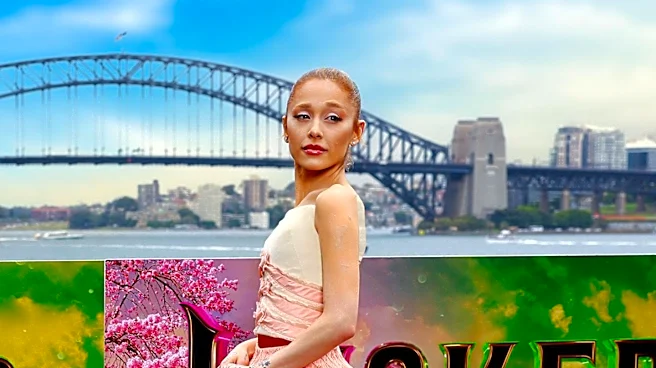
Actress Cynthia Erivo has publicly addressed the intense scrutiny surrounding her close friendship with Ariana Grande, describing their bond as a 'double-edged sword.' Erivo discussed the matter in an interview with The Guardian, where she reflected on the public's
reaction to their relationship, which developed during press tours for their upcoming films, 'Wicked' and 'Wicked: For Good' (2024 and 2025). Erivo noted that many observers acted as 'amateur psychologists,' analyzing their interactions from afar. She expressed surprise at the apparent annoyance some people displayed towards two women forming a genuine friendship, questioning the authenticity of their emotional connection. Erivo highlighted the paradox of public perception, suggesting that if they had shown less emotion, they would likely have faced different criticisms. She also mentioned that guidance on balancing emotional expression in the public eye might have been beneficial for both stars.
Why It's Important?
This situation highlights the unique pressures and public scrutiny faced by high-profile individuals, particularly women in the entertainment industry. The public's intense focus on celebrity relationships, even platonic ones, can lead to unwarranted speculation and judgment, impacting the personal lives of those involved. Erivo's comments shed light on the broader societal tendency to dissect and often criticize emotional displays from public figures, especially when those displays challenge conventional narratives about female friendships. This can create an environment where celebrities feel compelled to manage their emotions and interactions carefully, potentially hindering genuine connections. The 'double-edged sword' analogy underscores the no-win situation many public figures encounter, where any form of emotional expression can be misinterpreted or criticized, affecting their public image and personal well-being.
What's Next?
While Erivo has addressed the public's perception of her friendship with Grande, it is unlikely that the scrutiny will entirely dissipate, given the high profiles of both actresses and the continued public interest in their upcoming 'Wicked' films. Both Erivo and Grande will likely continue to navigate public attention as they promote their joint projects. Their continued public appearances together may still draw commentary, regardless of Erivo's recent statements. The discussion initiated by Erivo could, however, encourage a broader conversation about the nature of celebrity friendships and the public's role in scrutinizing them. It may also prompt other public figures to share their experiences with similar pressures, potentially fostering a more understanding environment for emotional expression in the public sphere.
Beyond the Headlines
Beyond the immediate news, Erivo's remarks touch upon deeper societal issues regarding gender, emotion, and public perception. The questioning of the authenticity of a close female friendship can be seen as a reflection of ingrained biases or stereotypes about women's relationships. The idea that two successful women cannot genuinely be close without ulterior motives or that their emotional expressions are somehow performative speaks to a broader skepticism that can undermine genuine human connection. This incident also raises questions about the ethical boundaries of public consumption of celebrity lives, where personal relationships become fodder for public debate and amateur psychological analysis. It underscores the constant pressure on public figures to conform to certain expectations, even in their private interactions, and the psychological toll this can take.