



What's Happening?
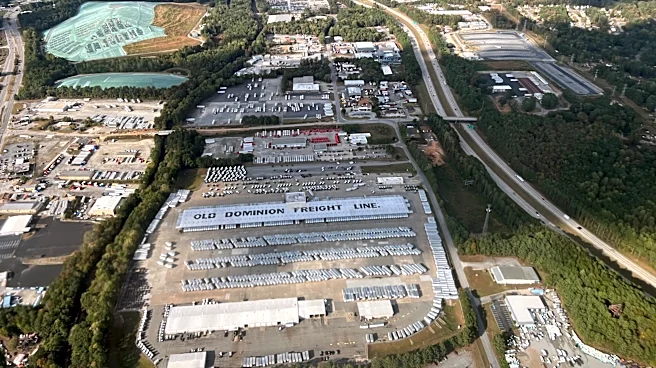
Institutional investors have recently made substantial entries into the Wilmington-area's industrial market through two significant transactions. Principal Financial Group, a global financial services firm, invested nearly $60 million in the recapitalization
of the first three buildings of Wilmington Trade Center. Concurrently, New York Life Insurance Company acquired International Commerce Center, a building within International Logistics Park, for $32.8 million. These deals, which occurred in the past month and early September respectively, signal a growing interest from large-scale capital in the Cape Fear region's industrial sector. Brokers involved in these transactions, such as Pete Pittroff and Travis Anderson of JLL Capital Markets, and Rob Cochran of Cushman & Wakefield, highlight that these investments are a testament to Wilmington's job and population growth, attracting institutional capital that was not present a decade ago.
Why It's Important?
The influx of institutional investment into Wilmington's industrial market is a significant indicator of the region's economic maturation and growing appeal. This type of capital typically seeks stable, long-term returns, suggesting confidence in Wilmington's sustained growth trajectory. For the local economy, these investments can lead to further development, job creation, and increased property values. It also provides a 'Good Housekeeping seal of approval,' as noted by Rob Cochran, potentially attracting more institutional players who see the commitment from major firms like Principal Financial and New York Life as a validation of the market's potential. This can transform Wilmington into a more competitive industrial hub, offering modern facilities and attracting diverse businesses, which benefits local employment and tax revenues.
What's Next?
The recent investments are expected to pave the way for continued large-scale capital interest and further development in Wilmington's industrial market. Brokers anticipate that the presence of major institutional investors will encourage others to explore opportunities in the region. Developers like Edgewater Ventures, which is leading the Wilmington Trade Center project, will likely continue to expand their industrial parks, potentially attracting more tenants and creating additional demand for high-quality industrial space. The success of these initial institutional ventures could lead to a sustained trend of investment, fostering a more robust and dynamic industrial sector in the Cape Fear region. This could also influence infrastructure development and support services to accommodate the growing industrial footprint.
Beyond the Headlines
The entry of institutional investors into a regional market like Wilmington signifies a broader trend of capital seeking growth opportunities beyond traditional major metropolitan areas. This decentralization of investment can have profound effects on regional economies, accelerating development and potentially leading to increased urbanization and demographic shifts. While beneficial for economic growth, it also raises questions about the long-term impact on local communities, including housing affordability, infrastructure strain, and the preservation of local character. The focus on 'Class A industrial buildings' with strong tenants suggests a move towards higher-value industrial activities, which could diversify the local job market but also require a skilled workforce, prompting investments in education and training programs.