





What's Happening?
Evolito, a company specializing in electric propulsion systems for aerospace applications, is undergoing rapid scaling of its production capabilities. The company's mission is to advance the adoption of electric propulsion in aerospace to support a net-zero
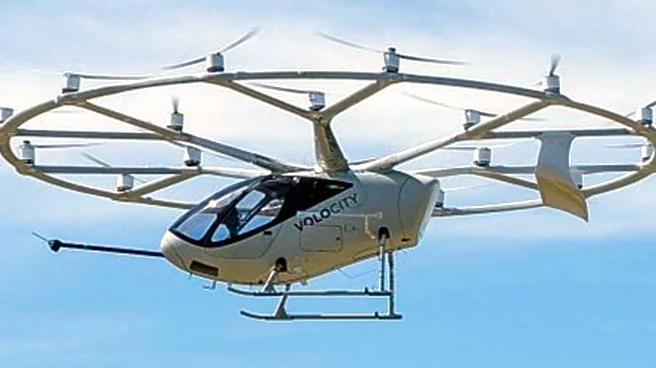
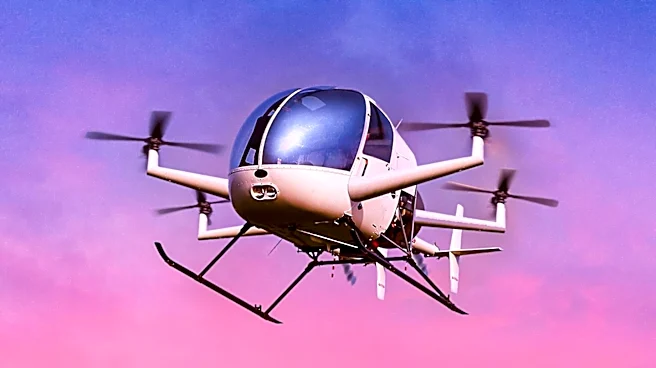
world, aiming to revolutionize personal mobility and urban air transportation with clean, quiet solutions. Evolito develops and manufactures lightweight, high-power, and high-torque-density electric propulsion systems for various aerospace markets, including eVTOL (electric Vertical Take-Off and Landing) aircraft, Unmanned Aerial Vehicles, and General Aviation. In addition to electric motors and controllers, Evolito also focuses on high-integrity, bespoke battery systems for the aerospace and defense sectors. The company has ambitious growth plans set for the next twelve to eighteen months, indicating a significant expansion in its manufacturing and operational capacity. This growth includes hiring a Manufacturing Test Engineer to develop, validate, and support manufacturing test processes and equipment for scalable production.
Why It's Important?
The rapid scaling of Evolito's production of electric propulsion systems is crucial for the advancement of the U.S. aerospace industry and the broader global push towards sustainable aviation. Increased production capacity for these advanced systems directly supports the development and deployment of eVTOL aircraft, which are poised to transform urban mobility and logistics. This expansion signifies a growing confidence in the commercial viability and technological maturity of electric aviation. For the U.S., this could lead to job creation in high-tech manufacturing and engineering, foster innovation in related sectors like battery technology and materials science, and enhance national competitiveness in the emerging advanced air mobility market. Furthermore, the focus on net-zero emissions aligns with environmental goals, potentially reducing the carbon footprint of air travel and contributing to cleaner urban environments. The development of robust, scalable manufacturing processes is a critical step in moving electric aviation from niche applications to widespread adoption, impacting transportation infrastructure, regulatory frameworks, and energy demands.
What's Next?
Over the next twelve to eighteen months, Evolito plans to significantly expand its operations, which will likely involve further recruitment, investment in manufacturing infrastructure, and refinement of its production processes. The company's focus on developing and validating manufacturing test processes and equipment suggests an emphasis on ensuring the safety, reliability, and scalability of its products. This expansion is expected to enable Evolito to meet the increasing demand for electric propulsion systems across various aerospace applications. As production scales, the availability of these systems will likely accelerate the development and certification of new eVTOL aircraft and other electric aerial vehicles. This could lead to more partnerships with aircraft manufacturers and potentially faster market entry for electric air mobility solutions. The continued growth of companies like Evolito will also likely drive further innovation in electric motor, controller, and battery technologies, pushing the boundaries of what is possible in electric aviation.
Beyond the Headlines
The scaling of Evolito's electric propulsion system production has deeper implications beyond immediate market growth. It underscores a fundamental shift in the aerospace industry towards electrification, challenging traditional fossil fuel-dependent models. This transition is not merely technological but also involves significant ethical and cultural considerations, particularly regarding noise pollution, urban planning, and accessibility of air travel. As eVTOL technology matures and becomes more prevalent, questions of equitable access to these new forms of transportation, their integration into existing urban infrastructure, and the potential impact on public perception of air travel will become increasingly important. The development of robust, high-integrity battery systems for aerospace and defense also highlights the dual-use nature of many advanced technologies, with potential applications in both civilian and military contexts. This could lead to new regulatory challenges and debates around technology transfer and national security. Ultimately, Evolito's expansion is a microcosm of a larger industrial transformation, signaling a future where electric air mobility could redefine how people and goods move, with profound societal and environmental consequences.