





What's Happening?
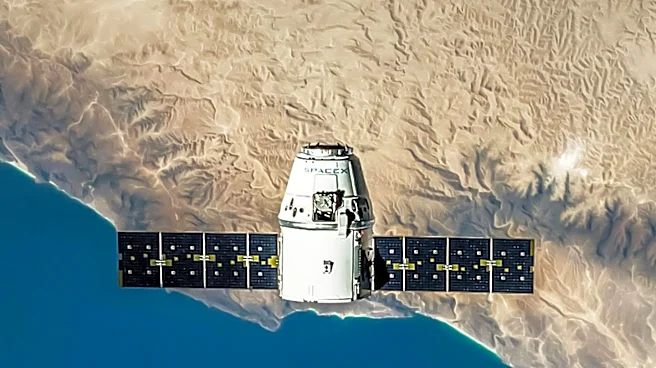
SpaceX's recent IPO highlights the company's significant role in the space industry, particularly with its ambitious plans to expand satellite operations. The company aims to increase the number of satellites in low Earth orbit (LEO) to up to one million,
a move that could exacerbate the already crowded conditions in this orbital region. In 2025, SpaceX's Starlink satellites performed approximately 300,000 collision-avoidance maneuvers, a 50% increase from the previous year, indicating the growing congestion in LEO. The company is exploring very low Earth orbit (VLEO) as a potential solution, which could offer a self-cleaning environment due to atmospheric drag. This shift could help mitigate collision risks and support the development of orbital data centers, which are seen as crucial for managing the increasing demands on global electrical grids.
Why It's Important?
The expansion of satellite operations by SpaceX is significant for several reasons. Firstly, it underscores the growing importance of space infrastructure in global telecommunications and data management. The potential for orbital data centers to alleviate pressure on electrical grids is particularly relevant as artificial intelligence demands increase. However, the congestion in LEO poses risks, including the Kessler effect, where collisions create debris that leads to further collisions, potentially rendering parts of orbit unusable. This situation necessitates a reevaluation of satellite deployment strategies and emphasizes the need for sustainable practices in space operations. The success of SpaceX's initiatives could set a precedent for the industry, influencing regulatory frameworks and investment in space technologies.
What's Next?
Moving forward, SpaceX and other stakeholders in the space industry will need to address the challenges of operating in crowded orbital environments. This includes developing technologies and strategies for sustainable satellite deployment, such as utilizing VLEO. Regulatory bodies may need to establish guidelines for satellite operations to prevent collisions and manage space debris. Additionally, the industry will likely see increased collaboration between companies and governments to ensure the long-term viability of space infrastructure. As SpaceX continues to innovate, its approach to these challenges could shape the future of satellite operations and influence global policies on space sustainability.
Beyond the Headlines
The implications of SpaceX's expansion extend beyond immediate operational challenges. The company's efforts highlight the broader trend of commercial entities playing a pivotal role in space exploration and infrastructure. This shift raises questions about the governance of space and the responsibilities of private companies in maintaining orbital sustainability. Furthermore, the development of VLEO technologies could lead to advancements in satellite capabilities, such as improved imaging and connectivity, which may have far-reaching impacts on industries ranging from telecommunications to environmental monitoring.