
What's Happening?
Lithium Americas (TSX:LAC) stock is currently trading at a P/E ratio of 2.9x, which is significantly lower than the broader metals and mining group's 10.7x and its peer set's 57.6x. This valuation suggests
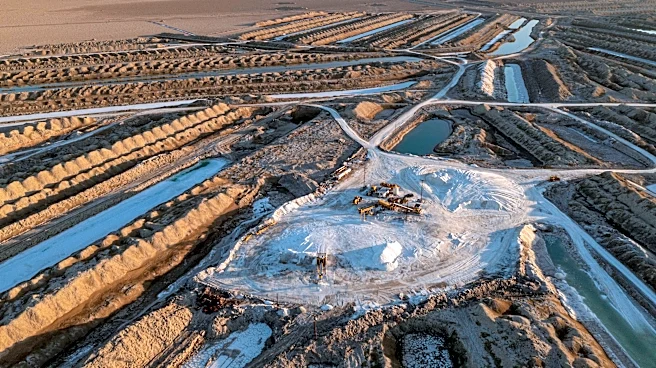
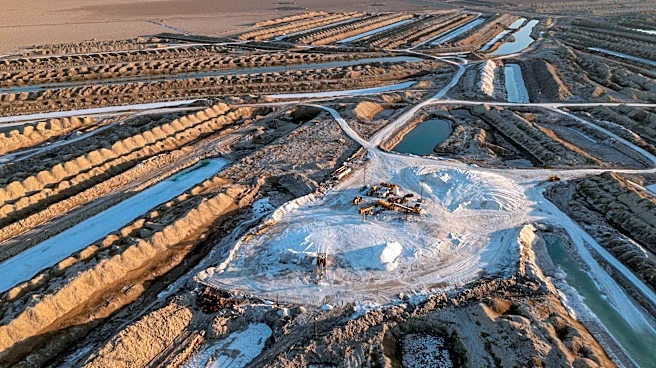
the stock may be undervalued based on its earnings. The company's share price has fallen by 78.4% over the past three years. A key factor influencing this situation is the estimated 31% increase in construction costs for the Thacker Pass Phase 1 project. This rise in costs introduces construction risk and potential future cash needs, which the market is currently weighing against the company's valuation. Despite these concerns, the present earnings multiple remains well below both industry and peer levels, prompting questions about whether the project and funding risks fully justify such a low earnings tag.
Why It's Important?
The apparent undervaluation of Lithium Americas' stock, despite increased project costs, has significant implications for investors and the broader U.S. metals and mining sector. For current shareholders, the central question is whether the project and funding risks associated with the Thacker Pass operation warrant the current low earnings multiple, or if the gap to its 'Fair Ratio' benchmark has become too wide to ignore. The Thacker Pass project is a major lithium development in the U.S., and its financial performance and construction progress are critical for the domestic supply chain of lithium, a key component in electric vehicle batteries and renewable energy storage. The market's perception of the project's viability and cost overruns could influence investment in other critical mineral projects, affecting the U.S.'s strategic goals for energy independence and technological advancement. A sustained undervaluation could deter future investment in similar large-scale mining ventures.
What's Next?
Investors will be closely monitoring the progress and financial management of the Thacker Pass Phase 1 project. The company's ability to manage the increased construction costs and secure necessary funding will be crucial in determining its future valuation. As fresh financial data and project updates become available, investors will be able to stress-test the assumptions behind the current valuation. The market will be looking for clear indications that the project can deliver the outcomes necessary to justify the current P/E ratio and share price over time. Any further cost escalations or delays could put additional pressure on the stock, while successful execution and a clearer path to profitability could lead to a re-evaluation of its market price. The company's narrative, outlining its growth, profitability, and risk evolution, will be a key tool for stakeholders to track its performance.
Beyond the Headlines
The situation with Lithium Americas highlights a broader challenge in the critical minerals sector: balancing the need for domestic resource development with the inherent risks and capital intensity of large-scale mining projects. The 31% increase in the Thacker Pass project's budget underscores the complexities and potential for cost overruns in developing new mining operations, especially for strategic resources like lithium. This scenario could influence future government policies regarding incentives and support for critical mineral projects, as well as investor appetite for such ventures. The long-term implications extend to the U.S.'s ability to establish a robust and secure supply chain for essential materials, reducing reliance on foreign sources. The market's reaction to these cost increases also reflects a growing scrutiny of project execution and financial discipline within the mining industry, potentially leading to more rigorous due diligence for future investments.