




What's Happening?
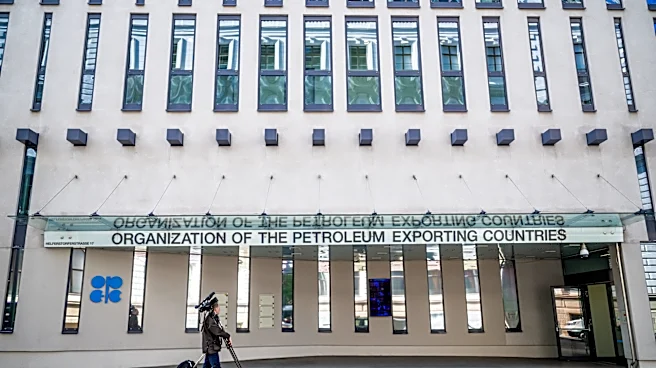
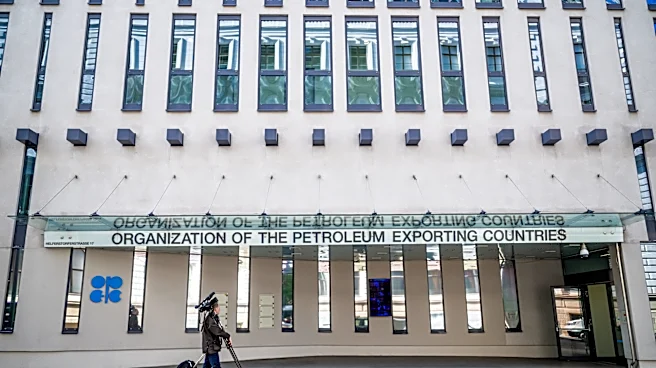
Nigeria has maintained compliance with its Organisation of the Petroleum Exporting Countries (OPEC) crude oil production quota for six consecutive months, a development that has fueled expectations for the country to achieve its long-held ambition of producing
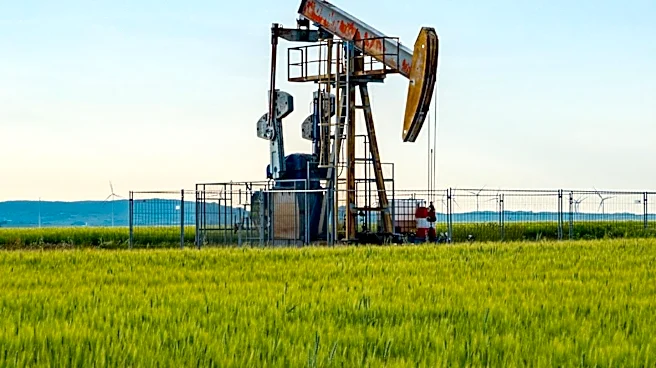
three million barrels of oil per day. In October 2026, Nigeria produced an average of 1.51 million barrels per day (bpd) of crude oil, excluding condensates, which is approximately 101 percent of its 1.5 million bpd OPEC quota, according to figures from the Nigerian Upstream Petroleum Regulatory Commission (NUPRC). This consistent compliance marks an improvement in production stability after years of disruptions caused by oil theft, pipeline vandalism, and operational challenges. While crude oil production saw a marginal 1.7 percent month-on-month decline, the six-month streak indicates a positive trend. Combined crude oil and condensate production averaged about 1.69 million bpd in October, with condensates contributing approximately 170,000 bpd.
Why It's Important?
This sustained compliance is significant for Nigeria's economic outlook, as highlighted by energy expert Oluwaseun Dania. Improved production consistency could lead to stronger government revenue, increased foreign exchange earnings, and additional resources for national development. Nigeria heavily relies on oil earnings to support its government revenue and foreign exchange inflows. Higher production could provide more fiscal resources for investment in critical sectors such as electricity, transportation, healthcare, and education. Dania attributes this progress partly to the administration's efforts to attract investment, improve the regulatory environment, and strengthen oil infrastructure. However, achieving the three million bpd target would require nearly doubling current crude oil production, necessitating sustained investment, development of new fields, and addressing existing infrastructure challenges.
What's Next?
To reach its three million bpd production ambition, Nigeria must attract fresh capital into exploration and production, enhance crude evacuation infrastructure, and bolster security around pipelines and production facilities. Dania suggests that offshore assets and underdeveloped oil and gas fields are potential sources for additional production, emphasizing the need for greater investment in exploration and existing infrastructure. There is also a call for continued engagement with OPEC for a potential upward review of Nigeria's production quota, given its demonstrated ability to sustain higher output. An increased quota would offer more room for growth, but Nigeria would still need to prove its operational capacity to consistently produce above its current allocation. The challenge for Nigeria is shifting from merely meeting its existing quota to building the necessary investment, infrastructure, and operational capacity for significantly higher production.
Beyond the Headlines
The success of Nigeria's production recovery will ultimately be measured by its broader impact on the economy and the living standards of its citizens, rather than just production figures. The extent of economic benefits will depend on global oil prices, production costs, effective revenue management, and the government's ability to translate increased earnings into productive investments. While the six-month compliance record is a positive indicator, achieving the ambitious three million bpd target hinges on maintaining production stability, attracting long-term capital, and ensuring that additional oil earnings contribute to widespread economic gains. This situation underscores the complex interplay between national resource management, international oil policies, and domestic economic development.