



What's Happening?
Gen Z fashion in 2027 is characterized by a significant revival of 2010s styles, bringing back mall brands such as PacSun and Aerie. Key elements of this trend include embellished denim, statement jewelry, and recognizable designer accessories. Beyond
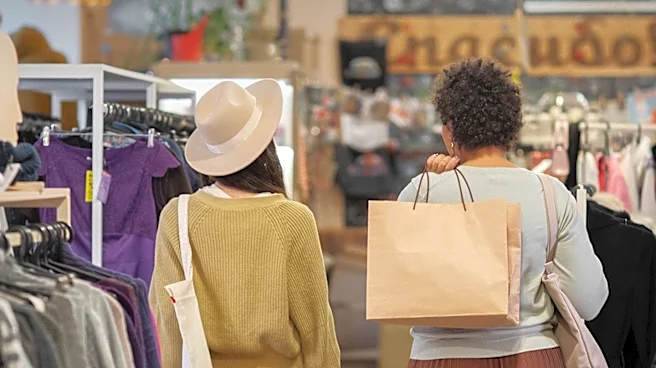
specific aesthetics, there's a growing emphasis on sustainability within this demographic. Gen Z consumers are increasingly interested in practices like sewing, repairing, and upcycling their clothing to minimize waste. This shift reflects a broader consciousness about environmental impact and a desire for more responsible consumption. Additionally, self-gifting and communal shopping experiences with friends are popular holiday habits, with brands like Urban Outfitters adapting to these social shopping rituals. Influencers play a crucial role in this landscape, prioritizing originality and fostering genuine communities, as Gen Z values shared experiences and authentic narratives over mere product promotion.
Why It's Important?
This evolving fashion landscape among Gen Z holds significant implications for the U.S. retail and apparel industries. The resurgence of 2010s styles and specific mall brands indicates a potential shift in consumer demand, requiring retailers to adjust their inventory and marketing strategies to cater to nostalgic preferences. The strong focus on sustainability presents both a challenge and an opportunity for brands. Companies that can authentically integrate eco-friendly practices, offer repair services, or promote upcycling initiatives are likely to gain favor with this demographic, while those that do not may risk losing market share. The preference for self-gifting and social shopping also highlights the importance of experiential retail and personalized marketing. Brands that understand and leverage the desire for community and shared stories, as promoted by influencers, will be better positioned to connect with Gen Z consumers, who are increasingly buying into narratives rather than just products.
What's Next?
Looking ahead, brands and retailers will likely continue to adapt their offerings to align with Gen Z's dual interest in nostalgic fashion and sustainable practices. This could involve increased investment in circular fashion initiatives, such as resale platforms and repair programs, and the development of product lines that incorporate recycled or ethically sourced materials. Marketing efforts will probably lean further into influencer collaborations that emphasize authenticity, community building, and storytelling, moving away from purely transactional promotions. Retail spaces might evolve to offer more interactive and social shopping experiences, catering to the trend of shopping with friends. Furthermore, the demand for originality and 'lore' from influencers suggests a future where brand narratives become even more critical, requiring continuous engagement and a deeper understanding of youth culture to maintain relevance.
Beyond the Headlines
The Gen Z fashion trends reflect deeper cultural and economic shifts. The embrace of sustainability points to a generation acutely aware of environmental issues, potentially driving long-term changes in manufacturing and consumption patterns across industries. The revival of 2010s styles, often associated with a pre-digital native adolescence, could be interpreted as a search for comfort or a simpler aesthetic in a complex world. The emphasis on 'lore' and community in influencer culture highlights a desire for authenticity and connection that transcends traditional advertising. This generation's preference for shared experiences and stories over mere product acquisition suggests a redefinition of value, where ethical considerations, personal expression, and social belonging are as important as, if not more than, the product itself. This could lead to a more conscious consumer market, pushing brands to be more transparent and purpose-driven.