






What's Happening?
The annual Pro Farmer Crop Tour for corn and soybeans in the U.S. Corn Belt commenced, with scouts departing from Columbus, Ohio, and Sioux Falls, South Dakota. This tour, which runs for four days, aims to provide the first hand-measured evidence of crop
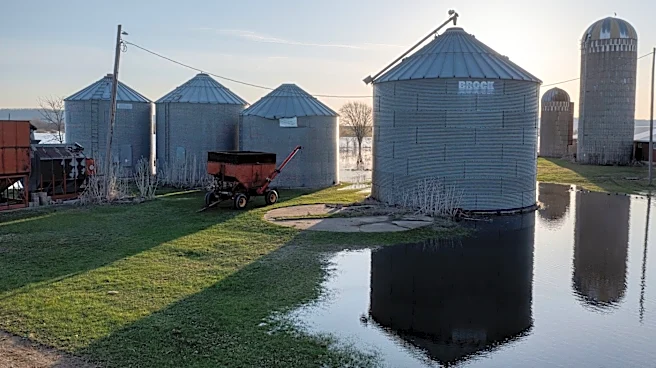
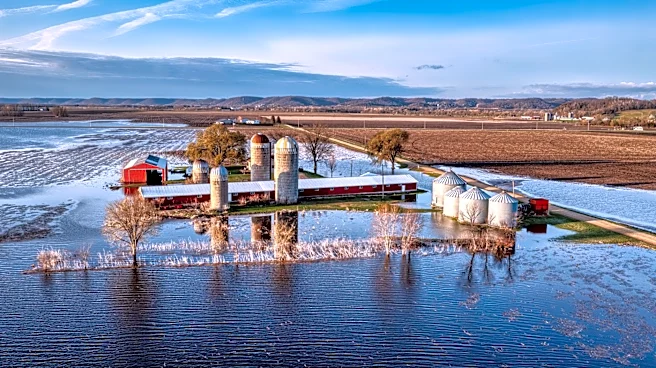
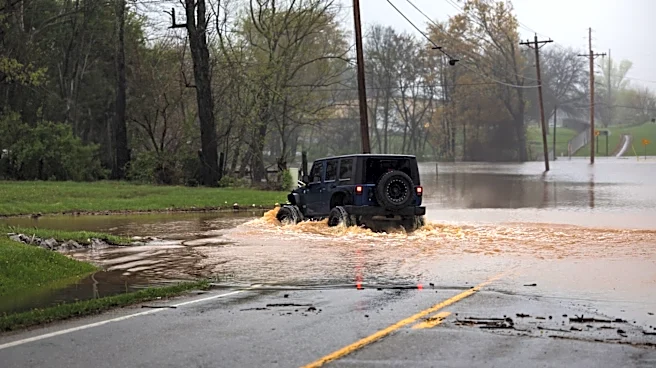
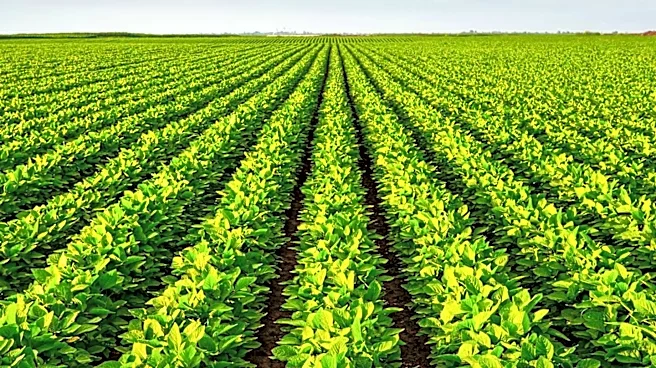
conditions across seven key states: Ohio, Indiana, Illinois, Iowa, Minnesota, Nebraska, and South Dakota. These states collectively account for approximately 70% of U.S. corn and soybean production. The eastern Corn Belt has experienced record rainfall and flooding, leading to downed corn and standing water, while the western Corn Belt continues to grapple with drought conditions. Jim Wiesemeyer, an agricultural journalist, noted the significant disparity in crop appearance depending on the region. The tour's findings will be crucial in assessing whether the ear counts and kernel rows support the U.S. Department of Agriculture's (USDA) current yield estimates. Pro Farmer will release its national corn and soybean production estimates on Friday afternoon.
Why It's Important?
The Pro Farmer Crop Tour is a significant event for grain traders globally, as its findings can act as a major catalyst for corn and soybean prices. The tour provides an independent, on-the-ground assessment that either corroborates or challenges the USDA's official reports, which are based on August 1 conditions. Given the wide range of weather impacts—from severe flooding in the east to drought in the west—the tour's data will offer critical insights into the actual state of the crops. Discrepancies between the tour's measurements and USDA estimates can lead to price volatility in agricultural markets. Farmers, commodity traders, and food industries rely on accurate crop forecasts to make informed decisions regarding planting, purchasing, and pricing. A clearer picture of potential yields helps stabilize or adjust market expectations, impacting the profitability of agricultural businesses and potentially influencing consumer food costs.
What's Next?
The Pro Farmer Crop Tour will continue through Thursday, with scouts sampling over 2,000 fields using a consistent methodology established in the 1990s. The daily state results, which are mechanical averages of physical counts, will be published each evening. The tour will converge in Rochester, Minnesota, on Thursday night for its final meeting. The most anticipated outcome will be the release of Pro Farmer's national corn and soybean production estimates on Friday afternoon. These estimates will incorporate crop maturity, acreage adjustments, areas outside the tour's routes, and historical tour-versus-USDA relationships, potentially including a 'flood discount' for damaged areas. The market will closely analyze these figures to determine if they align with or deviate from the USDA's August 12 report, which projected a national corn yield of 180.7 bushels per acre and a record soybean crop of 4.519 billion bushels.
Beyond the Headlines
The Pro Farmer Crop Tour highlights the increasing vulnerability of U.S. agricultural production to extreme weather events, a trend that could have long-term implications for food security and agricultural policy. The contrasting conditions of flooding in one region and drought in another underscore the challenges farmers face in adapting to a changing climate. This variability can lead to greater reliance on advanced agricultural technologies, such as machine-learning models and satellite data, to provide more accurate and timely crop assessments. Furthermore, the tour's findings could influence discussions around crop insurance programs, disaster relief, and sustainable farming practices designed to mitigate the impacts of such weather extremes. The consistent methodology of the tour, despite evolving environmental conditions, emphasizes the importance of historical data and comparative analysis in understanding agricultural trends and market dynamics.