


What's Happening?
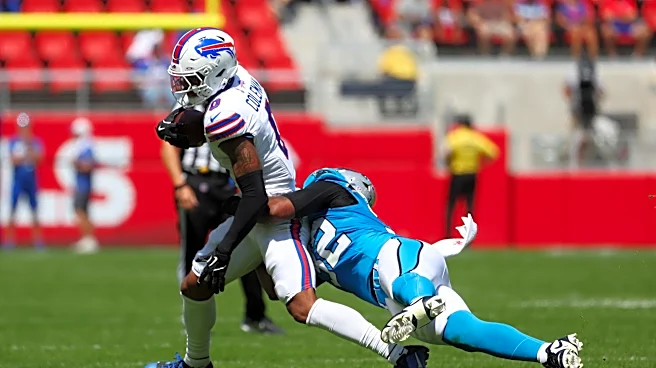
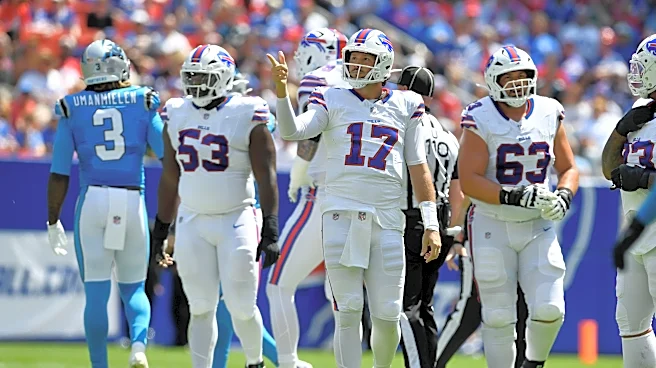
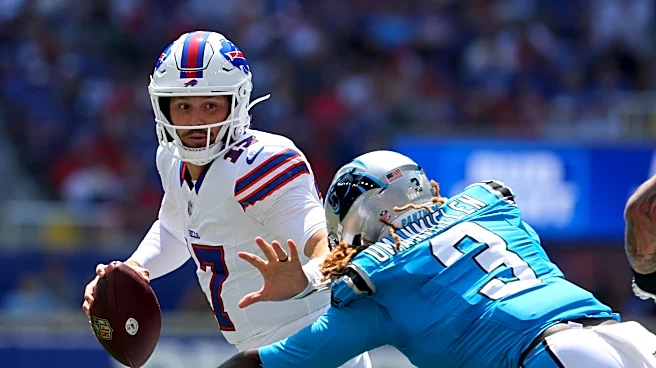
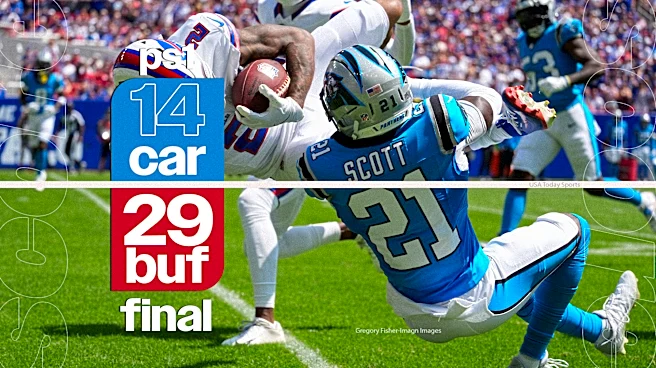
The Buffalo Bills' new grass field at Highmark Stadium exhibited signs of wear and tear during its preseason opening game against the Carolina Panthers. Clumps of turf were churned up, and a divot briefly halted play for replacement. Bills president Pete
Guelli acknowledged the issues but stated that the field's playability and safety were satisfactory. He explained that the field, installed 10 months ago, is still in its first year and requires time for its root system and foundation to strengthen. The team's groundskeeping crew is monitoring the field's maturation, comparing it to the growth of their practice field, which was sodded a decade ago. The new stadium, costing $2.1 billion, marks a switch from artificial turf to Kentucky bluegrass, a change supported by owner Terry Pegula and favored by the NFL Players Association due to injury concerns on artificial surfaces.
Why It's Important?
The condition of the Buffalo Bills' new grass field is important for player safety and the overall integrity of NFL games. The NFL Players Association has consistently advocated for grass fields, citing statistics that indicate a higher incidence of injuries on artificial turf. The Bills' decision to switch to natural grass aligns with this player welfare concern, making the initial performance of the new field a critical test case. If the field continues to show significant wear, it could raise questions about the effectiveness of the installation and maintenance, potentially impacting player confidence and increasing the risk of injuries. For the team, ensuring a stable and safe playing surface is paramount to protecting its multi-million dollar assets—its players. The long-term success of this grass field could influence other NFL teams considering similar transitions, reinforcing the league-wide trend towards natural playing surfaces.
What's Next?
The Buffalo Bills' groundskeeping crew will continue to monitor and manage the new grass field at Highmark Stadium, utilizing ventilation, heating, and grow-light systems to aid its maturation. The team has already taken steps to reduce wear and tear by canceling concerts at the stadium for the current year and opting not to host regional high school football championships in November. The next significant challenge for the field will be enduring the winter conditions, including snow and winds from Lake Erie. Bills president Pete Guelli indicated that adjustments will be made as needed to ensure optimal performance. The team will host another practice open to fans before their preseason finale against Pittsburgh on August 27, and their home opener against Detroit on September 17 will be another key test for the field's stability.
Beyond the Headlines
The transition to a natural grass field at Highmark Stadium reflects a broader cultural and scientific shift within professional sports regarding athlete well-being and performance. Beyond the immediate concerns of divots and turf stability, this move underscores a growing recognition of the long-term health implications of playing surfaces. The NFL Players Association's strong stance on grass fields highlights a power dynamic where player advocacy is increasingly influencing infrastructure decisions. This situation also touches upon the intersection of sports science and groundskeeping, as teams invest in advanced technologies and expertise to cultivate and maintain optimal natural playing environments. The success or challenges faced by the Bills' new field could set precedents for future stadium constructions and renovations across the league, potentially accelerating a league-wide move away from artificial turf and towards more player-friendly natural surfaces, thereby impacting the entire ecosystem of professional football.