







What's Happening?
Community-owned electric utilities, represented by the American Public Power Association (APPA), are facing increasing challenges in maintaining their affordability edge. Historically, these utilities have offered lower rates and reliable service, with
decisions made locally. However, Scott Corwin, president and CEO of APPA, highlights that the landscape is changing due to national focus on resource adequacy and reliability. Factors such as demand growth, generation retirements, and slow progress in new generation and transmission are contributing to these challenges. APPA represents about 2,000 community-owned systems across the U.S., serving over 55 million Americans. Despite these pressures, public power utilities continue to offer lower rates compared to investor-owned utilities (IOUs) and cooperatives, with residential customers paying significantly less on average.
Why It's Important?
The ability of public power utilities to maintain lower rates is crucial for millions of Americans who rely on affordable electricity. As demand increases and older plants retire, the pressure to ensure resource adequacy and reliability grows. Public power utilities' ability to manage costs through tax-exempt financing and local control is vital in this context. The affordability gap between public power and other utilities has been widening, with public power rates rising at a slower pace. This affordability is essential for economic stability, especially in regions where energy costs significantly impact household budgets. The ongoing challenges in maintaining this edge could have broader implications for energy policy and the economic well-being of communities served by these utilities.
What's Next?
Public power utilities are likely to continue advocating for policies that support their financial tools, such as tax-exempt financing and Elective Pay Tax Credits. The APPA is also focusing on addressing structural challenges like permitting delays and workforce shortages. As demand for electricity grows, particularly with the rise of data centers, public power utilities will need to balance new opportunities with the risks of overextension. The sector's ability to adapt to these changes while maintaining affordability and reliability will be critical. Ongoing discussions around energy policy, infrastructure investment, and regulatory reforms will play a significant role in shaping the future of public power utilities.
Beyond the Headlines
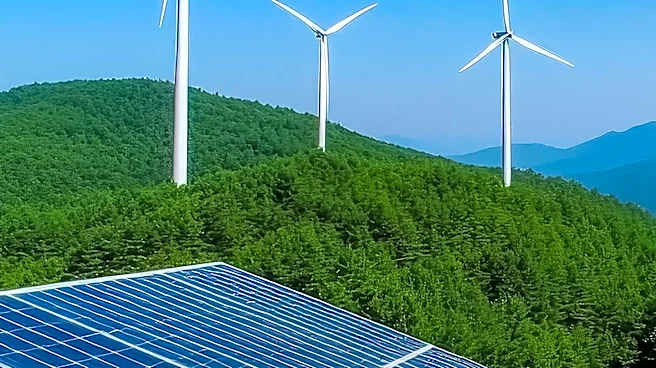
The challenges faced by public power utilities highlight broader issues in the energy sector, such as the need for modernization and the integration of renewable energy sources. The sector's reliance on natural gas and the slow adoption of wind and solar reflect the complexities of transitioning to a more sustainable energy mix. Additionally, the focus on cybersecurity and supply chain resilience underscores the importance of protecting critical infrastructure. As public power utilities navigate these challenges, their experiences could inform national energy policy and contribute to a more resilient and sustainable energy system.