





What's Happening?
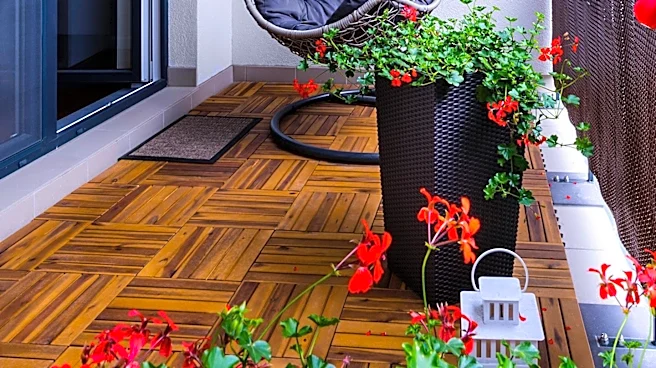
An Instagram creator, @hausnr_8, has devised a method to transform IKEA RUNNEN deck tiles into decorative covers for potted plants. The project utilizes the existing structure of the RUNNEN tiles, which consist of wood slats mounted on a black plastic
grid. Instead of using the tiles for their intended purpose of flooring, the creator reconfigures them to form the four walls of a planter. This involves removing parts of the plastic connectors, joining the panels with zip ties, and folding them at the corners to create a square enclosure. The finished product functions as an aesthetic cover for existing nursery pots, concealing the original container while showcasing the wood slats. According to the creator, one package of RUNNEN tiles provides enough material to construct two such planters.
Why It's Important?
This innovative repurposing of IKEA RUNNEN deck tiles highlights a growing trend in DIY and sustainable home decor, offering a cost-effective and creative solution for enhancing backyard landscaping. By transforming readily available and often leftover materials, individuals can reduce waste and personalize their outdoor spaces without significant investment. This approach is particularly relevant for urban dwellers or those with smaller outdoor areas, as it provides a stylish way to integrate potted plants into their environment. The project also demonstrates the versatility of modular furniture components, encouraging consumers to think beyond the intended use of products and explore their potential for customization and upcycling. This trend can influence consumer purchasing habits, favoring products that offer multiple applications and contribute to a more sustainable lifestyle.
What's Next?
The popularity of such DIY projects, especially those shared on social media platforms like Instagram, is likely to inspire more individuals to explore creative uses for common household and garden items. This could lead to a proliferation of similar upcycling ideas and tutorials, further promoting sustainable practices in home decor and gardening. Retailers, including IKEA, might observe this trend and potentially offer more modular or adaptable products that lend themselves to creative repurposing. Additionally, the success of projects like this could encourage a broader conversation about product design and the potential for manufacturers to incorporate multi-functional or easily modifiable elements into their offerings, catering to a consumer base increasingly interested in customization and environmental responsibility.
Beyond the Headlines
This project taps into a deeper cultural shift towards sustainability and personalized living, where consumers are increasingly valuing unique, handcrafted items over mass-produced goods. The act of repurposing not only reduces waste but also imbues objects with a sense of individuality and narrative. Ethically, it promotes a 'reduce, reuse, recycle' mindset, challenging the linear consumption model. From a design perspective, it showcases how simple, modular components can be recontextualized to serve entirely new functions, fostering creativity and problem-solving. This trend also underscores the power of social media in disseminating innovative ideas and building communities around shared interests in DIY and sustainable living, influencing both individual behavior and broader market trends in home and garden industries.