





What's Happening?
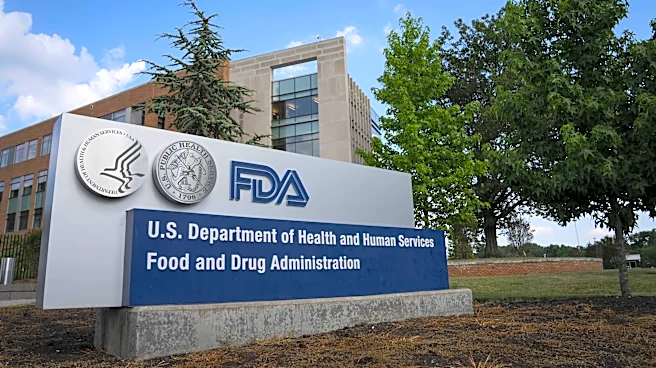
Lab-grown meat, formally known as cultivated meat, has received regulatory clearance from both the U.S. Food and Drug Administration (FDA) and the U.S. Department of Agriculture (USDA) in 2023. This approval marks a significant step towards its introduction
into the U.S. market, though availability remains limited. Cultivated meat is produced by growing animal cells in a controlled environment, a process that results in a product designed to replicate the taste, smell, texture, and consistency of traditional meat. Experts like Elliot Swartz, PhD, a cultivated meat researcher at The Good Food Institute, explain that the process involves multiplying animal cells to form muscle and other tissues. Despite regulatory approval, the concept has faced a surge of misinformation and conspiracy theories on social media, leading to consumer confusion. Steven Surico, RD, a registered dietitian, notes that cultivated meat differs from plant-based alternatives as it originates from animal cells, while products like Beyond Meat are primarily plant-based.
Why It's Important?
The introduction of lab-grown meat into the U.S. food supply chain carries significant implications for food safety, public health, nutrition, and environmental sustainability. Proponents argue that cultivated meat can address various challenges associated with conventional meat production, including reducing the environmental impact of livestock farming and potentially offering a more controlled and safer food product. The regulatory approval from the FDA and USDA provides a framework for consumer confidence and market entry, yet widespread public acceptance hinges on overcoming prevalent misinformation. The distinction between cultivated meat and plant-based alternatives is crucial for consumer understanding and market positioning. As the technology advances and production scales, it could reshape the meat industry, offering consumers new choices and potentially mitigating some of the ecological pressures linked to traditional agriculture.
What's Next?
Following regulatory approval, lab-grown meat is beginning to enter the U.S. market, albeit in limited quantities. Companies like Upside Foods have already made their cultivated chicken available in select restaurants and dining programs in California, including Chimmelier in Los Angeles and Stanford Dining. The next phase will likely involve scaling up production to make these products more widely accessible and affordable. Currently, Upside Foods has the capacity to produce over one million pounds of cultivated chicken annually. Overcoming consumer skepticism and misinformation will be critical for broader adoption, necessitating clear communication from producers and regulatory bodies about the nature and safety of these products. Further state-level regulatory developments, such as bans in some U.S. states, will also influence market penetration and availability.
Beyond the Headlines
The emergence of lab-grown meat extends beyond mere food production, touching upon ethical, economic, and cultural dimensions. Ethically, it offers an alternative for consumers concerned about animal welfare in traditional farming. Economically, it represents a nascent industry with significant investment potential, attracting high-profile investors and challenging established meat producers. The scaling of production, which once seemed a distant goal, is now becoming a reality, as demonstrated by companies achieving substantial production capacities. However, the industry faces hurdles such as the high initial cost of production, which has significantly decreased but still needs to become competitive with conventional meat. The ongoing public discourse, heavily influenced by social media, highlights the broader societal challenge of distinguishing scientific fact from misinformation in rapidly evolving technological fields.