









What's Happening?
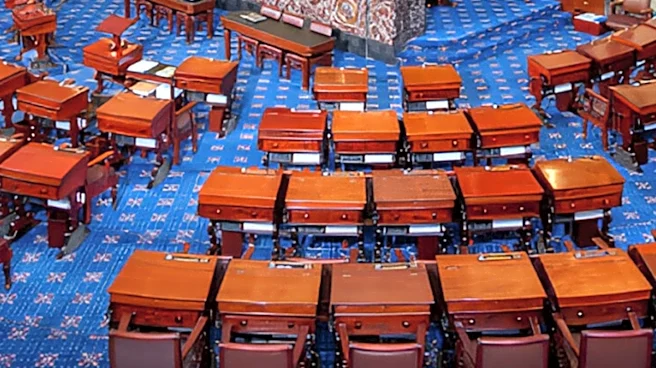
The Clarity Act, a proposed legislative measure, is being championed by Coinbase Vice Chair Ryan VanGrack as a necessary step to protect consumers from fraud in the digital asset market. This comes in the wake of the Senate's unanimous resolution to deny
Sam Bankman-Fried, the convicted founder of FTX, any chance of a presidential pardon. The Clarity Act aims to establish a framework to prevent frauds similar to the FTX scandal by providing clear guidelines for digital asset regulation. The Act is currently under consideration in the Senate, with proponents urging a vote before the August recess. The Act's passage is seen as crucial by supporters, including prediction market platforms and crypto exchanges, who argue it will prevent future large-scale frauds and provide a stable regulatory environment for digital assets.
Why It's Important?
The Clarity Act is significant as it addresses the growing need for regulatory clarity in the digital asset market, which has been marred by high-profile fraud cases like FTX. By establishing a legal framework, the Act seeks to protect consumers and ensure market integrity. This is particularly important as digital assets become more integrated into the financial system. The Act also highlights the bipartisan nature of digital asset regulation, as noted by Wyoming Senator Cynthia Lummis, emphasizing that it is not a partisan issue but a matter of market functionality. The potential passage of the Clarity Act could pave the way for new services and exchanges, such as Polymarket, to operate legally in the U.S., thereby fostering innovation and competition in the digital asset space.
What's Next?
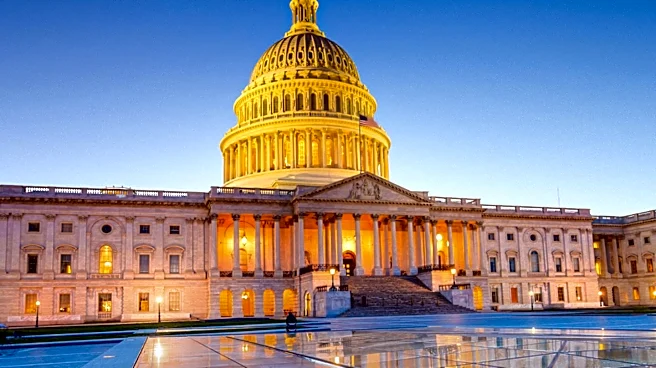
The Clarity Act is currently stalled in the Senate as key committees deliberate on its final form. If the Act is unified and brought to a vote, it could significantly alter the regulatory landscape for digital assets in the U.S. The outcome of this legislative process will be closely watched by stakeholders in the digital asset market, including exchanges, investors, and regulators. Should the Act pass, it could lead to increased regulatory oversight and potentially stricter compliance requirements for digital asset platforms. Conversely, failure to pass the Act could leave the market in a state of regulatory uncertainty, potentially stifling growth and innovation.
Beyond the Headlines
The debate over the Clarity Act also touches on broader issues of how digital assets are classified and regulated. Some lawmakers, like Nevada Representative Dina Titus, argue that prediction markets are misclassifying their products to gain federal oversight, which could undermine state and tribal regulatory authority. This raises questions about the balance of power between federal and state regulation in the digital asset space. Additionally, the Act's focus on consumer protection highlights ongoing concerns about the transparency and fairness of digital asset markets, particularly in relation to information asymmetry and market manipulation.