






What's Happening?
Industrial real estate giant Prologis has filed a lawsuit against the City of Trenton, Ohio, following a resident vote to ban data centers exceeding 25 megawatts. Prologis is developing a 250-megawatt data center campus, reportedly for Amazon, on 141
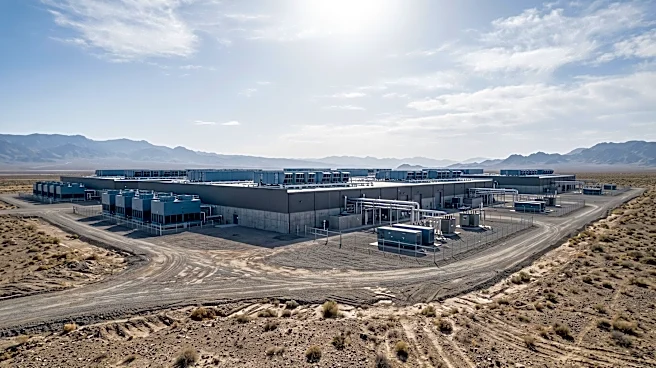
acres acquired from the city for $7.7 million in October 2025. The project, known as Project Mila, is planned to include four 220,000 sq ft single-story buildings and an on-site substation. Despite a statement from Prologis respecting the vote's outcome and asserting it would not affect their project, the company filed the lawsuit on November 12 in the U.S. District Court for the Southern District of Ohio. The complaint argues that Trenton’s charter amendment, passed by nearly 80 percent of residents on November 3, is unconstitutional and cannot be lawfully applied to its development, seeking a court declaration that the amendment is unenforceable against the project. Groundwork for the project has already begun, with significant investment made prior to the vote.
Why It's Important?
This lawsuit highlights a growing tension between industrial development, particularly data centers, and local community concerns regarding resource consumption and environmental impact. For Prologis and its reported client, Amazon, the ability to proceed with large-scale data center construction is crucial for expanding cloud infrastructure and meeting increasing demand for digital services. A successful ban could set a precedent for other communities to resist similar developments, potentially impacting the growth trajectory of the data center industry in the U.S. Conversely, if Prologis prevails, it could limit the power of local referendums to halt projects that have already received initial approvals and significant investment. The outcome will influence future investment decisions by technology and real estate companies in areas where community sentiment might clash with large-scale industrial projects, affecting job creation, tax revenues, and local services that such developments often promise.
What's Next?
The U.S. District Court for the Southern District of Ohio will now review Prologis's complaint, which seeks to declare Trenton's charter amendment unconstitutional and unenforceable against its data center project. The City of Trenton has indicated it will actively defend the action to protect the validity and lawful enforcement of its city charter. Concurrently, a local conservation group, Conserve Ohio, which advocated for the ban, has threatened to sue the city if it does not revoke Prologis's zoning certificate. This indicates a multi-front legal battle is likely, with significant implications for the project's future. The legal proceedings will determine whether the project's prior approvals will be protected or if the resident-approved ban will take precedence. The resolution of this case could influence how similar disputes between developers and local communities are handled across the country, particularly concerning infrastructure projects with substantial environmental or resource demands.
Beyond the Headlines
This case delves into the complex interplay between local democratic processes and property rights, as well as the broader implications of rapid technological expansion on community autonomy. The residents' vote reflects concerns over the environmental footprint of data centers, particularly their significant energy and water consumption, which can strain local resources. The legal challenge by Prologis, arguing unconstitutionality, underscores the potential for state and federal legal frameworks to override local ordinances, raising questions about the balance of power between different levels of governance. This situation could lead to increased scrutiny of how large-scale industrial projects are approved and integrated into communities, potentially prompting legislative changes at state levels to clarify the authority of local governments in regulating such developments. It also highlights the ethical considerations for corporations in navigating community opposition, even when projects are legally compliant, and the growing public awareness of the environmental impact of digital infrastructure.