








What's Happening?
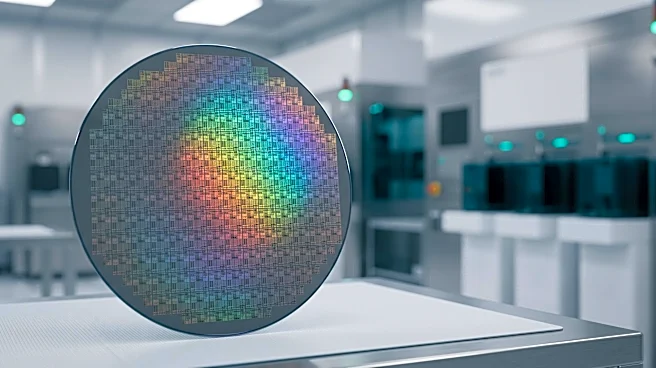
Navitas Semiconductor (NASDAQ:NVTS) saw its stock rise by 2% to $11.96 in premarket trading after securing a contract with the U.S. Army. The company was selected to produce chips for the Army's ALATTIS (Accelerated, Large-Area, 10 kV SiC IGBT) program.
This contract will enable Navitas to develop 10 kV of silicon carbide power semiconductors. Despite this recent gain, Navitas Semiconductor's stock has experienced significant fluctuations, having shed approximately 65% since its record high of $34.17 on June 3. However, it remains up 64.3% year-to-date. The stock is currently facing pressure at its 60-day moving average, and short interest accounts for 16.6% of its available float.
Why It's Important?
This U.S. Army contract is a significant development for Navitas Semiconductor and the broader U.S. defense technology sector. Securing a government contract, especially from the U.S. Army, provides a stable revenue stream and validates the company's technological capabilities in silicon carbide power semiconductors. These advanced chips are crucial for high-power applications, which are increasingly vital for military equipment and infrastructure. The contract not only boosts Navitas's financial outlook but also strengthens the domestic supply chain for critical semiconductor components, reducing reliance on foreign manufacturers. This aligns with national security interests by ensuring access to cutting-edge technology for defense applications. Furthermore, the development of 10 kV silicon carbide power semiconductors could have broader implications for energy efficiency and power management in various commercial and industrial sectors, potentially driving innovation beyond military uses.
What's Next?
Navitas Semiconductor will proceed with the development of 10 kV silicon carbide power semiconductors under the ALATTIS program. The successful execution of this contract could lead to further opportunities within the defense sector and potentially expand the company's market reach. Investors will be closely monitoring the company's progress on this contract and its impact on future earnings reports. The stock's performance will also be influenced by its ability to overcome the current pressure at its 60-day moving average and manage its short interest. The long-term trajectory of Navitas Semiconductor will depend on its continued innovation in silicon carbide technology and its ability to secure additional contracts, both governmental and commercial, to diversify its revenue streams and stabilize its stock performance amidst market volatility.
Beyond the Headlines
The U.S. Army's investment in advanced silicon carbide power semiconductors through companies like Navitas Semiconductor highlights a strategic push towards modernizing military technology and enhancing energy efficiency in defense applications. Silicon carbide technology offers superior performance in high-power, high-temperature environments compared to traditional silicon, making it ideal for demanding military systems. This contract reflects a broader trend of the U.S. government investing in domestic semiconductor capabilities to ensure technological superiority and supply chain resilience, especially in critical areas like defense. The development of such specialized chips also has dual-use potential, meaning advancements made for military purposes could eventually trickle down into commercial applications, benefiting sectors like electric vehicles, renewable energy, and industrial power electronics. This synergy between defense and commercial innovation can accelerate technological progress and create new economic opportunities, while also addressing national security concerns related to technological independence.