






What's Happening?
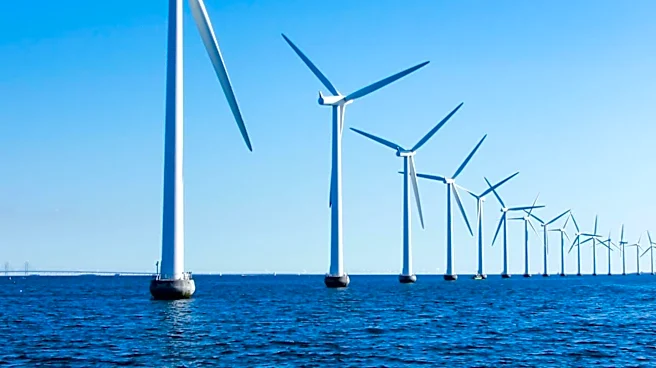
GE Vernova is experiencing issues affecting numerous turbines at the Dogger Bank offshore wind farm. The lead-developer of the Dogger Bank project has stated that these turbine problems will not derail the progress of what is slated to be the world's
largest offshore wind farm. While the exact nature and extent of the issues are not fully detailed, the developer's assurance suggests that mitigation strategies are in place or being developed to manage the impact. This development comes as the offshore wind industry continues to expand globally, with many projects relying on advanced turbine technology from manufacturers like GE Vernova. The Dogger Bank wind farm is a significant undertaking, and any technical challenges with its core components draw considerable attention within the renewable energy sector.
Why It's Important?
The issues with GE Vernova turbines at the Dogger Bank offshore wind farm are significant for several reasons. Firstly, it highlights the complexities and potential technical hurdles in deploying large-scale renewable energy infrastructure. Turbine reliability is crucial for the economic viability and operational efficiency of wind farms, and widespread issues could lead to increased maintenance costs and reduced energy output. Secondly, as GE Vernova is a major player in the wind turbine manufacturing sector, any performance problems could impact its reputation and future contracts, potentially affecting the broader supply chain for offshore wind projects. The successful resolution of these issues is vital for maintaining investor confidence in large-scale renewable energy projects and ensuring the timely delivery of clean energy capacity.
What's Next?
The immediate next steps will likely involve GE Vernova and the Dogger Bank lead-developer working collaboratively to diagnose and rectify the turbine issues. This could entail detailed technical assessments, component replacements, or software updates. The developer's commitment to keeping the project on track suggests that a resolution plan is being actively pursued. Industry observers will be closely watching how quickly and effectively these problems are addressed, as it could set precedents for how similar challenges are managed in future offshore wind developments. Furthermore, the incident may prompt other wind farm operators and turbine manufacturers to review their own quality control and maintenance protocols to prevent similar occurrences.
Beyond the Headlines
Beyond the immediate operational concerns, the GE Vernova turbine issues at Dogger Bank underscore broader themes within the renewable energy transition. It highlights the ongoing need for robust research and development in turbine technology to ensure long-term reliability and performance in harsh offshore environments. This situation could also influence future procurement decisions, with developers potentially placing a greater emphasis on proven track records and comprehensive warranty agreements from turbine suppliers. Moreover, it serves as a reminder that while renewable energy offers significant environmental benefits, the deployment of such large-scale infrastructure is not without its engineering and logistical challenges, requiring continuous innovation and problem-solving across the industry.