








What's Happening?
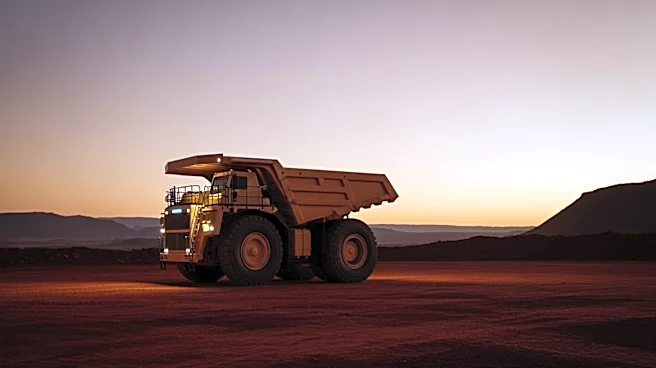
Mining giants BHP and Rio Tinto have initiated a trial of Caterpillar's battery-electric haul trucks at BHP's Jimblebar iron-ore mine in Western Australia. This trial is part of a broader effort by these companies to reduce their carbon emissions. The
initial three-month trial of two XE Early Learner battery-electric haul trucks has demonstrated significant progress, according to the companies. The Pilbara region, known for its large-scale mining operations, provides an ideal environment for testing these trucks due to its operational intensity. The next phase of the trial will focus on testing a system that allows the trucks to be charged while in operation, potentially enhancing their efficiency. Currently, Jimblebar hosts two of the seven Caterpillar Early Learner battery-electric haul trucks being tested globally.
Why It's Important?
The trial of electric haul trucks by BHP and Rio Tinto represents a significant step towards reducing emissions in the mining industry, which is traditionally known for its high carbon footprint. By adopting battery-electric technology, these companies are not only aiming to lower their environmental impact but also setting a precedent for other mining operations worldwide. The successful implementation of such technology could lead to widespread adoption, potentially transforming the industry and contributing to global efforts to combat climate change. This move also aligns with increasing regulatory pressures and societal expectations for industries to adopt more sustainable practices.
What's Next?
As the trial progresses, BHP and Rio Tinto will evaluate the performance and efficiency of the electric haul trucks, particularly focusing on the charging system that operates while the trucks are in use. If successful, this technology could be scaled up and integrated into broader mining operations, leading to significant reductions in emissions. The results of this trial could influence future investments in sustainable mining technologies and encourage other companies to explore similar initiatives. Stakeholders, including environmental groups and industry regulators, will likely monitor the outcomes closely, as they could have implications for future policy and industry standards.