





What's Happening?
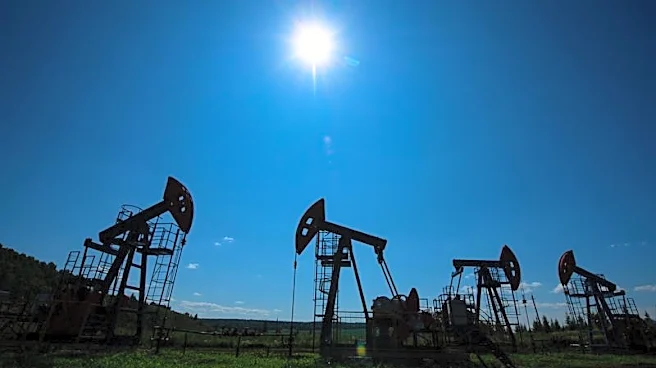
Oil prices have stabilized below $80 per barrel following two days of declines, as tensions surrounding the Strait of Hormuz continue to affect investor sentiment. Brent crude futures rose slightly to $79.67 a barrel, while U.S. West Texas Intermediate
crude increased to $75.88 a barrel. The market is closely monitoring efforts to resolve the U.S.-Iran conflict and restore shipping through the crucial waterway. Recent comments from Qatar about progress in mediation efforts have influenced oil prices, although Iran has denied any ongoing negotiations with the U.S.
Why It's Important?
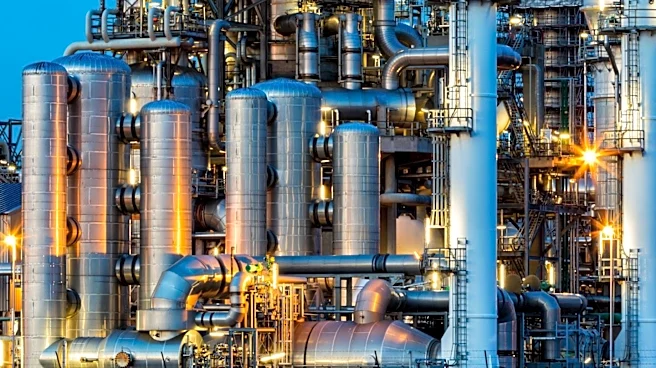
The stability of oil prices is critical for global economic stakeholders, as the Strait of Hormuz is a vital chokepoint for the world's oil supply. Approximately 20% of global oil and liquefied natural gas pass through this strait, making any disruption a significant concern for energy markets. The current situation highlights the geopolitical risks associated with oil supply and the potential impact on global energy prices. Investors and policymakers are keenly watching developments, as prolonged tensions could lead to further volatility in oil markets, affecting energy costs and economic stability worldwide.
What's Next?
Market participants are awaiting official U.S. inventory data, which could provide further insights into supply and demand dynamics. The U.S. Energy Information Administration is set to release this data, which may influence future price movements. Additionally, diplomatic efforts to resolve the U.S.-Iran conflict will be crucial in determining the long-term stability of oil prices. Any progress in negotiations could lead to a reduction in geopolitical tensions and a more stable energy market. Conversely, a lack of resolution may result in continued uncertainty and potential price fluctuations.