


What's Happening?
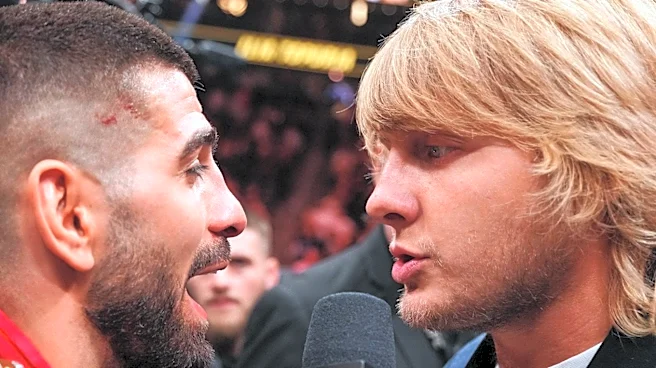
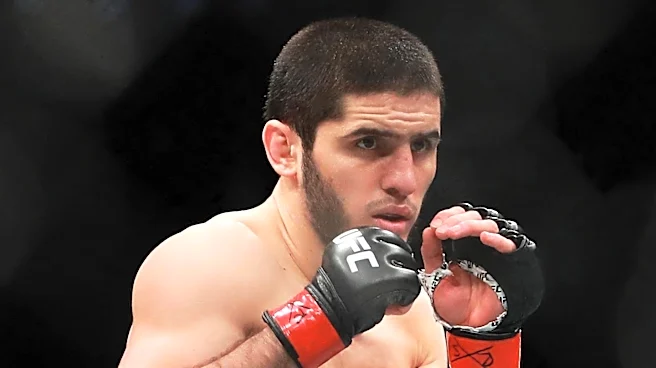
Paddy Pimblett contends that Ilia Topuria's rapid rise to prominence in the UFC is largely due to their long-standing rivalry. Speaking on Joe Rogan's podcast, Pimblett stated that Topuria utilized their feud to gain name recognition early in his career.
The rivalry dates back several years, including a hotel confrontation where Pimblett threw a hand sanitizer bottle at Topuria. At that time, Pimblett was already a well-known figure on the European MMA circuit, while Topuria had not yet achieved mainstream recognition. Pimblett believes that Topuria's profile was significantly boosted by this beef, despite acknowledging Topuria's skills in earning championship titles.
Why It's Important?
This narrative highlights the strategic importance of rivalries in combat sports for generating public interest and accelerating a fighter's career trajectory. For the UFC, compelling personal stories and feuds often translate into higher engagement, increased viewership, and greater commercial success. Pimblett's claim underscores how a fighter's marketability can be enhanced not just by their athletic performance but also by their ability to create a captivating public persona and engage in high-profile disputes. This dynamic can influence matchmaking decisions, as the UFC often seeks to capitalize on existing tensions to create more marketable and exciting events, benefiting both the fighters involved and the promotion.
What's Next?
The unresolved tension between Paddy Pimblett and Ilia Topuria continues to fuel speculation about a potential fight. Topuria is reportedly planning his return to the octagon after taking time off following his loss to Justin Gaethje. However, it remains unclear whether UFC matchmakers will schedule him against Pimblett immediately. A bout between these two rivals would be a highly anticipated event, given their history and the public interest generated by Pimblett's recent comments. The timing and location of such a fight would depend on the UFC's strategic planning and the fighters' readiness to compete.
Beyond the Headlines
Pimblett's assertion delves into the complex interplay between athletic achievement and celebrity culture in modern sports. In an era dominated by social media and constant content creation, athletes are increasingly expected to be entertainers and storytellers. The idea that a fighter can 'use' a rival's name for 'clout' suggests a calculated approach to career development that extends beyond training and competition. This phenomenon raises questions about the authenticity of rivalries and the extent to which they are organic versus strategically amplified for promotional purposes. It also reflects a broader trend where personal narratives and public drama are integral components of a sports brand, influencing fan engagement and commercial opportunities.