






What's Happening?
Harbour Energy has increased its full-year production guidance for 2026 to 500,000-505,000 barrels of oil equivalent per day (boed), up from the previous 490,000-500,000 boed. This adjustment follows a record average production of 501,000 boed during
the first nine months of the year, marking a 6% increase from the prior year. The company attributes this growth to strong operational performance and the successful integration of LLOG in the U.S. and Waldorf in the UK. Third-quarter production reached 484,000 boed, a 9% year-on-year increase, with output split approximately 40% liquids, 40% European gas, and 20% other gas. The additions of LLOG in the U.S. in February and Waldorf in the UK in July have more than compensated for divestments in Indonesia and Vietnam, as well as natural decline in the UK. October production averaged 511,000 boed, despite maintenance programs and Hurricane Isaias in the U.S.
Why It's Important?
This increased production guidance from Harbour Energy signals a robust performance in the global energy sector, with significant implications for U.S. energy markets. The successful integration of LLOG in the U.S. highlights the strategic importance of the U.S. Gulf region for major energy producers. Enhanced production contributes to global energy supply stability, potentially influencing oil and gas prices. For U.S. stakeholders, this could mean continued investment in domestic energy infrastructure and job creation in the oil and gas industry. The company's focus on accelerating high-return investment opportunities in the U.S. Gulf, including the approval of Who Dat East and the Salamanca FPS subsea pump project, indicates a positive outlook for regional economic activity. Furthermore, the award of 12 leases in the Big Beautiful Gulf 3 lease sale, with eight as operator, solidifies Harbour Energy's growing footprint in the U.S. offshore sector.
What's Next?
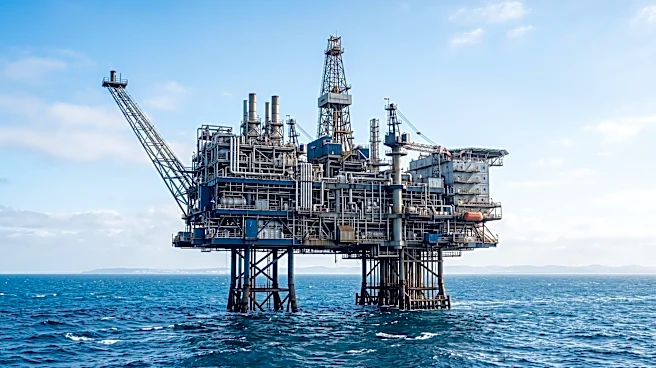
Harbour Energy plans to accelerate high-return investment opportunities in the U.S. Gulf, with a second drilling rig arriving in September. The Who Dat East project was approved in August, and the Salamanca FPS subsea pump project is on track for a final investment decision (FID) by year-end. The company also expects to spud the Kingsroad exploration well around year-end. In Norway, five further projects are targeted to reach FID by year-end, with the potential to deliver 100% Norway reserves replacement. The Omega Sør discovery is being fast-tracked toward a potential FID by year-end. Harbour Energy has also raised its 2026 free cash flow outlook by $800 million to approximately $2.6 billion and announced a further $150 million share buyback, indicating continued financial strength and potential returns for investors.
Beyond the Headlines
The sustained growth and strategic acquisitions by companies like Harbour Energy underscore a broader trend in the energy industry: the balancing act between traditional fossil fuel production and the transition to renewable energy. While Harbour Energy is expanding its oil and gas operations, the long-term implications involve how such companies will adapt to evolving climate policies and investor pressures for decarbonization. The increased production in the U.S. Gulf could also reignite debates about environmental regulations and the future of offshore drilling. The company's ability to integrate new assets and maintain high production levels, even amidst external challenges like hurricanes, highlights the resilience and technological advancements within the sector. This performance could influence future investment decisions in both conventional and unconventional energy sources, shaping the energy landscape for years to come.