






What's Happening?
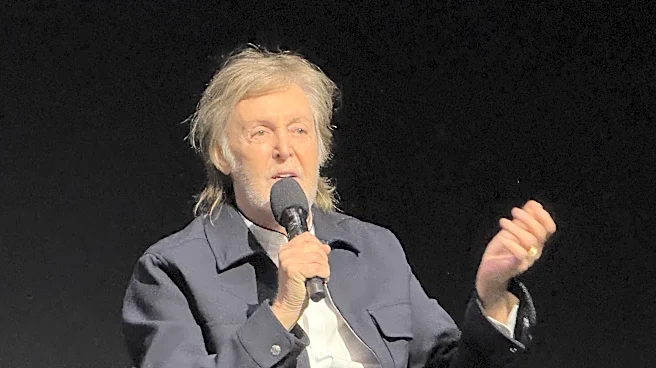
Paul McCartney recently promoted his Amazon MGM-produced documentary, 'Man on the Run,' in Los Angeles, which focuses on his life and career following the breakup of The Beatles. During a screening and discussion with director Morgan Neville and moderator
Judd Apatow, McCartney openly discussed the mental health challenges he faced after the band's dissolution in 1970. He described the period as a 'slight nervous breakdown' and admitted to increased drinking while living in Scotland with his family. McCartney also addressed the criticism he received from John Lennon regarding his post-Beatles work, particularly his album 'Ram' and his band Wings. He theorized that Lennon might have expected something different from him and that his own 'madcap' approach to music at the time might have been a factor. Despite the public spat, McCartney affirmed his enduring love and respect for Lennon, acknowledging Lennon's difficult upbringing as a potential reason for some of his behavior. The documentary is eligible for Best Documentary Feature in the upcoming awards cycle.
Why It's Important?
This candid reflection from Paul McCartney offers significant insight into the personal and professional struggles faced by one of music's most iconic figures after the end of The Beatles. It highlights the immense pressure and identity crisis that can accompany the disbandment of a globally successful group, even for a songwriter of McCartney's caliber. His discussion of mental health challenges and reliance on family support, particularly from his late wife Linda McCartney, underscores the human element behind celebrity. The renewed focus on his relationship with John Lennon, including the public criticisms and McCartney's understanding of Lennon's personal history, provides a deeper, more nuanced perspective on their complex dynamic. This narrative is crucial for understanding the creative and emotional landscape of the post-Beatles era, influencing how fans and critics interpret their individual works and legacies. The documentary's Oscar eligibility also brings renewed attention to this pivotal period in music history.
What's Next?
The documentary 'Man on the Run' is currently available on Prime Video, allowing a broad audience to delve into McCartney's post-Beatles journey. Its eligibility for Best Documentary Feature in the upcoming awards cycle suggests potential for further recognition and discussion, which could lead to increased viewership and critical analysis. McCartney's continued public appearances and interviews, such as the one in Los Angeles, will likely further illuminate aspects of his career and personal life, potentially inspiring new interpretations of his music and the history of The Beatles. The ongoing conversation about his relationship with John Lennon, fueled by these revelations, is expected to continue among fans and music historians, potentially leading to more scholarly work or media retrospectives on their intertwined legacies.
Beyond the Headlines
Beyond the immediate narrative of McCartney's post-Beatles career, his reflections touch upon broader themes of identity, artistic evolution, and the psychological impact of immense fame. The struggle to redefine oneself after a monumental success like The Beatles, and the subsequent public scrutiny, offers a universal lesson in resilience and self-discovery. McCartney's decision to form Wings, despite initial criticism and the shadow of his previous band, exemplifies the drive for creative autonomy. His acknowledgment of Lennon's personal traumas as a factor in their strained relationship highlights the often-overlooked human vulnerabilities behind public personas. This deeper understanding encourages a more empathetic view of historical figures and their complex interactions, moving beyond simplistic narratives of rivalry to appreciate the profound personal histories that shape artistic output and relationships.