
What's Happening?
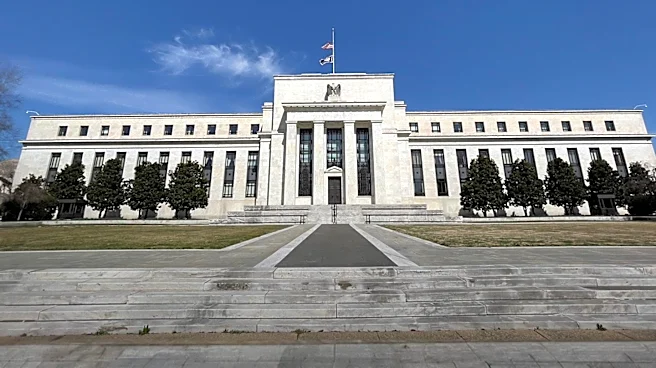
The U.S. bond market has seen the 30-year Treasury yield reach 5.24%, the highest level in two decades. This development follows the Federal Reserve's decision to leave interest rates unchanged at its
July meeting. The yield spike is attributed to ongoing inflation concerns and the Fed's rate decision, which has led to market speculation about future rate hikes. The bond market has been experiencing volatility, with long-duration Treasury bonds in a bear market since the COVID-19 pandemic. The recent yield increase reflects market fears that the Fed may be behind in controlling inflation, prompting investors to demand higher yields.
Why It's Important?
The rise in Treasury yields has significant implications for the U.S. economy and financial markets. Higher yields can lead to increased borrowing costs for the government and consumers, potentially slowing economic growth. For investors, the current environment presents challenges, as long-term Treasuries are sensitive to interest rate changes. The situation underscores the importance of monitoring inflation trends and Fed policy decisions, as these factors will influence market dynamics and investment strategies. The bond market's response also highlights concerns about the Fed's ability to manage inflation effectively, which could impact investor confidence and economic stability.
What's Next?
Looking ahead, the bond market will be closely watching upcoming economic data, including inflation reports and labor market statistics, to gauge the Fed's next moves. The futures market is already pricing in a potential rate hike at the Fed's September meeting. Investors may consider adjusting their portfolios to manage duration risk, possibly favoring short-term Treasury bills that are less sensitive to interest rate changes. The Fed's communication and policy decisions will be critical in shaping market expectations and addressing inflation concerns.
Beyond the Headlines
The current bond market dynamics raise questions about the long-term implications for monetary policy and economic growth. The Fed's approach to transparency and guidance will be crucial in maintaining market stability. Additionally, the interplay between inflation expectations and economic indicators will continue to influence investor behavior and financial markets. The situation also highlights the broader challenges of managing economic recovery in a post-pandemic world, where inflationary pressures and policy responses are closely intertwined.