




What's Happening?
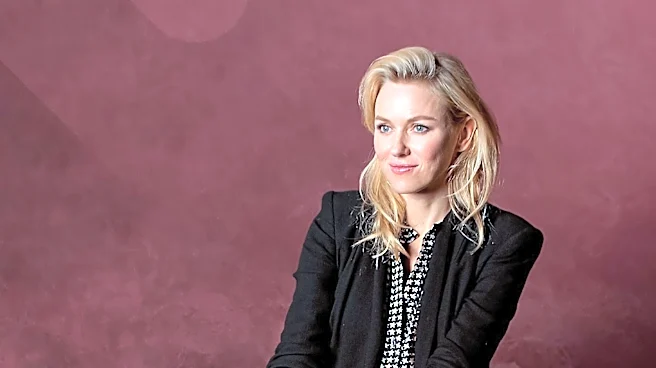
Naomi Watts starred in the NBC sci-fi series 'Sleepwalkers,' which premiered on November 1, 1997, and was canceled after only two episodes aired. The show, created by Stephen Kronish and David S. Goyer, was part of NBC's Saturday night programming block,
Thrillogy. Watts played Kate Russell, a dream interpreter and psychologist who utilized advanced technology to enter and navigate people's dreamscapes to help them confront their subconscious issues. Despite NBC's initial interest in the concept, the network reportedly felt the sci-fi elements lacked dimension and noted a lack of cohesion between the artistic styles of the two creators. This led to frequent disagreements between the creative team and NBC executives, who were uncertain about audience reception to the show's surrealism. Although nine episodes were produced, only two were broadcast nationally, receiving poor Nielsen ratings. Five additional episodes were aired exclusively on the West Coast the following year, while the final two installments were never shown in the United States.
Why It's Important?
The swift cancellation of 'Sleepwalkers' highlights the significant challenges faced by television networks in balancing creative vision with audience appeal and commercial viability. For NBC, the decision to pull the plug after just two episodes underscores the high-stakes nature of primetime programming and the immediate pressure for ratings. This event demonstrates how internal creative conflicts and network doubts about a show's marketability can lead to its premature demise, regardless of an intriguing premise or the talent involved. For actors like Naomi Watts, such early career setbacks are common in the entertainment industry, illustrating the often unpredictable path to success. While 'Sleepwalkers' did not achieve longevity, Watts's subsequent rise to stardom in projects like 'Mulholland Drive' shows that a single show's failure does not define an actor's career trajectory. The incident also reflects the broader trend of networks being hesitant to fully commit to genre-bending or surreal content if it doesn't immediately resonate with a mass audience.
What's Next?
While 'Sleepwalkers' itself has no foreseeable future given its cancellation decades ago, the story serves as a historical case study for television production and network decision-making. For Naomi Watts, her career continued to flourish, leading to significant roles in film and television, including recent appearances in Ryan Murphy's productions like 'The Watcher' and 'Feud: Bette & Joan.' The fragmented broadcasting and inconsistent availability of 'Sleepwalkers' mean that a comprehensive re-evaluation of its merits remains difficult. However, the intriguing premise of dream interpretation and psychological exploration through technology could potentially inspire future projects or be revisited in a different format, as themes of the subconscious and advanced tech continue to be popular in sci-fi. The challenges faced by the show's creators in aligning their artistic vision with network expectations remain relevant for contemporary showrunners navigating the complex landscape of television production.
Beyond the Headlines
The story of 'Sleepwalkers' delves into the deeper implications of creative control versus commercial demands within the television industry. The reported clashes between the show's creative team and NBC executives over the 'sci-fi elements' and 'surrealism' point to a perennial tension: whether to prioritize artistic integrity or broad audience appeal. This dynamic often shapes the content that ultimately reaches viewers, potentially stifling innovative or unconventional narratives that might take time to build an audience. The show's premise, involving dream interpretation and confronting the subconscious, touches upon psychological and philosophical themes that could have offered a unique viewing experience. Its failure to launch successfully suggests that in the competitive landscape of network television, even compelling concepts can be sacrificed if they don't fit neatly into established audience expectations or if there's a lack of unified vision. This highlights the inherent risk in pushing creative boundaries within a commercial framework, where immediate returns often outweigh long-term artistic development.