







What's Happening?
General Dynamics business units have been awarded three Navy contract actions totaling approximately $117.6 million. These contracts cover enterprise IT services, long-lead materials for Virginia-class submarines, and undersea research. Specifically,
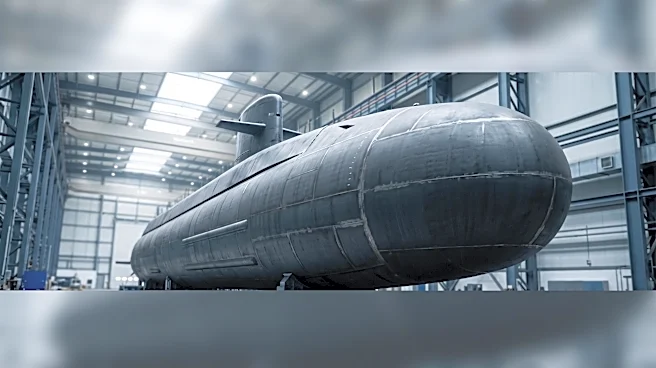
General Dynamics Information Technology (GDIT) received a $56 million ceiling increase for an existing indefinite-delivery/indefinite-quantity contract, aimed at consolidating Navy help desks into the Navy Enterprise Service Desk by October 2027. General Dynamics Electric Boat secured a $41.6 million undefinitized contract action for the procurement of long-lead materials essential for Virginia-class submarines, with work expected to be completed by June 2031 in Franklin, Massachusetts. Additionally, General Dynamics Applied Physical Sciences was awarded a $20 million cost-plus-fixed-fee completion contract for Advancements in Undersea Dominance and Naval Engineering. This research will involve studies and the development of naval technologies using first-principles analysis and physics-based modeling and simulation, with work performed in Groton, Connecticut, through September 2031. The Navy has obligated approximately $24 million in funding at the time of award across these actions.
Why It's Important?
These Navy contract awards are significant for several reasons, primarily bolstering U.S. national security and defense capabilities. The $56 million increase for GDIT's IT services contract underscores the Navy's commitment to modernizing its enterprise IT infrastructure, which is crucial for operational efficiency and cybersecurity. This consolidation effort will streamline support services, potentially leading to cost savings and improved responsiveness for naval personnel. The $41.6 million contract for General Dynamics Electric Boat to procure long-lead materials for Virginia-class submarines is vital for maintaining the production schedule of these critical underwater assets. Virginia-class submarines are a cornerstone of the U.S. Navy's undersea warfare capabilities, and ensuring a steady supply of components is essential for national defense and strategic deterrence. The $20 million research contract for General Dynamics Applied Physical Sciences highlights the continuous need for innovation in naval technologies, particularly in undersea dominance. Advancements in this area are crucial for maintaining a technological edge against potential adversaries and ensuring the safety and effectiveness of U.S. naval operations. These contracts collectively support high-tech job creation and sustainment within the U.S. defense industrial base.
What's Next?
For General Dynamics Information Technology, the focus will be on executing the expanded IT services contract to successfully consolidate legacy help desks into the Navy Enterprise Service Desk by the October 2027 deadline. This will involve significant coordination and technical implementation across various Navy systems. For General Dynamics Electric Boat, the next steps involve finalizing pricing and contractual terms for the undefinitized action and proceeding with the procurement of long-lead materials for Virginia-class submarines. This work is critical to prevent delays in submarine construction and will continue through June 2031. General Dynamics Applied Physical Sciences will commence its research and development activities for Advancements in Undersea Dominance and Naval Engineering, with studies and technology development ongoing through September 2031. The Navy will continue to monitor the progress and effectiveness of these contracts, with future funding and contract actions likely dependent on performance and evolving defense needs. The successful execution of these contracts will contribute to the long-term modernization and operational readiness of the U.S. Navy.
Beyond the Headlines
The awarding of these contracts reflects a broader strategic imperative within the U.S. Department of Defense to invest in both cutting-edge technology and foundational support systems. The emphasis on consolidating IT services, as seen with the GDIT contract, points to a larger trend of optimizing government operations through digital transformation and efficiency initiatives. This not only aims to reduce operational costs but also to enhance the resilience and security of critical defense networks against evolving cyber threats. The continued investment in Virginia-class submarines and undersea research through General Dynamics Electric Boat and Applied Physical Sciences underscores the enduring importance of naval power projection and technological superiority in a complex global security landscape. These contracts are not merely transactional; they represent a sustained commitment to maintaining a robust defense industrial base, fostering innovation, and ensuring the U.S. Navy remains at the forefront of maritime capabilities. The long-term nature of some of these contracts also suggests a strategic vision for continuous development and adaptation in defense technology, rather than short-term fixes.