




What's Happening?
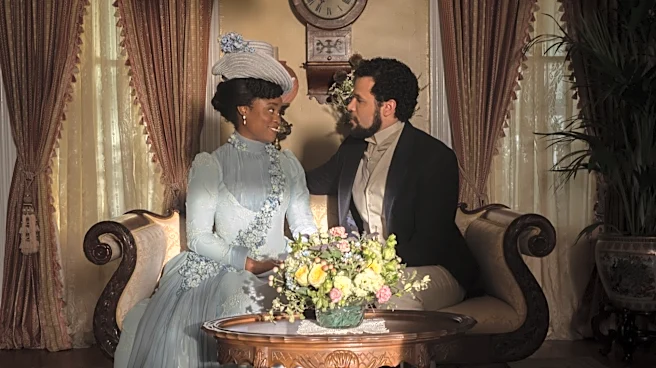
HBO's 'The Gilded Age' is drawing attention for its portrayal of a Black elite in 1880s America, a period less than 20 years post-emancipation. The series, particularly through the storyline of Peggy Scott, centers on the Black bourgeoisie whose narratives
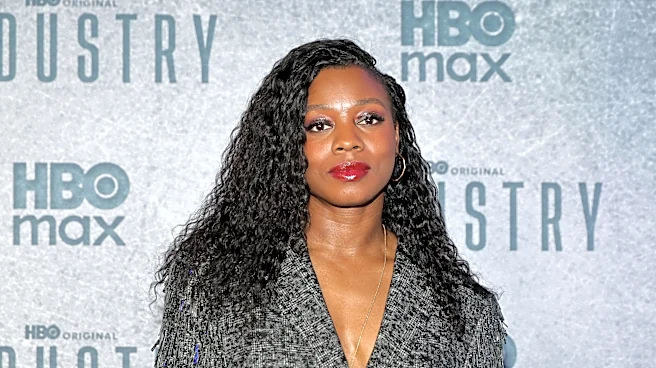
have often been overlooked in historical accounts and entertainment. Sonja Warfield, a writer and executive producer for the show, notes that the existence of a Black elite in the 1880s often surprises viewers. The show explores class distinctions within Black society, exemplified by the juxtaposition of the Scotts and the Kirklands. For instance, the Scotts face scrutiny for failing the 'brown paper bag test' and for Peggy's father's past enslavement, while the Kirklands pride themselves on their long-standing free lineage in Rhode Island, with ancestors who fought in the Revolutionary War. This dynamic highlights internal class structures and differing views on heritage and respectability within the Black community of the era.
Why It's Important?
The depiction of a Black elite in 'The Gilded Age' is significant as it challenges conventional historical narratives that often omit or marginalize the experiences of affluent Black individuals during this period. By showcasing the Black bourgeoisie, the series provides a more nuanced understanding of American society in the late 19th century, moving beyond a singular focus on white upper-class struggles and achievements. This representation can foster a broader appreciation for the diversity of historical experiences and the complexities of class and race in post-Civil War America. It also offers a platform for discussing how historical omissions impact contemporary understanding and how entertainment can serve as a tool for historical re-education and cultural reflection. The show's success in this area demonstrates a demand for more inclusive historical storytelling.
What's Next?
The series is expected to continue exploring the intricate social dynamics and class distinctions within the Black community, as well as their interactions with the broader Gilded Age society. Future storylines will likely delve deeper into how characters like Peggy Scott navigate issues of identity, tradition, and progress. The show's approach may encourage other period dramas to adopt more inclusive casting and storytelling, potentially leading to a shift in how historical narratives are presented in mainstream media. The ongoing exploration of these themes could also spark further academic and public interest in the underrepresented histories of Black Americans during this transformative period.
Beyond the Headlines
The show's focus on the Black elite and internal class distinctions within the Black community raises deeper questions about the construction of historical memory and the power of media to shape public perception. By highlighting figures like Peggy Scott, 'The Gilded Age' implicitly critiques the historical erasure of certain groups and their contributions. This can lead to a re-evaluation of what constitutes 'history' and whose stories are deemed worthy of telling. The series also touches on ethical considerations regarding the portrayal of historical traditions, such as 'jumping the broom,' and how these traditions are viewed and reclaimed across generations, reflecting ongoing debates about cultural heritage and identity.