

What's Happening?
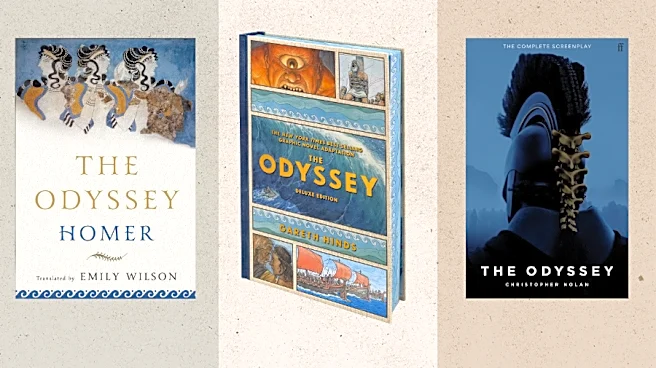
Emily Wilson, a classical studies professor at the University of Pennsylvania, has expressed her dissatisfaction with Christopher Nolan's film adaptation of 'The Odyssey'. Wilson, whose 2017 translation of the ancient Greek poem inspired the film, critiqued
it in the London Review of Books. She described the film as lacking narrative and emotional depth, comparing it to a 'Fourth of July fireworks display'. Despite acknowledging the film's entertainment value, Wilson criticized its vision as 'too confused' and its characters as 'underdeveloped'. She argued that the film fails to capture the psychological, emotional, political, and ethical depth of the original poem. Wilson also noted that the film's narrative structure is 'gimmicky' and the script 'abysmal'. Despite her criticisms, Wilson expressed humility that Nolan cited her translation in the film.
Why It's Important?
The critique from Emily Wilson highlights the challenges of adapting classic literature into film, particularly when it involves complex narratives like 'The Odyssey'. Her comments underscore the importance of maintaining the depth and richness of the original text in adaptations. This critique could influence public perception and reception of the film, potentially affecting its box office performance and critical acclaim. It also raises questions about the balance between artistic interpretation and fidelity to source material in cinematic adaptations. For scholars and fans of classical literature, Wilson's review may reinforce concerns about the commercialization of classic works and the potential loss of their intrinsic value.
What's Next?
The film's reception, influenced by critiques like Wilson's, may prompt discussions among filmmakers and scholars about the approach to adapting classic literature. It could lead to a reevaluation of how such adaptations are crafted, possibly encouraging more faithful renditions or innovative interpretations that still respect the source material. The film industry might also see increased collaboration with literary experts to ensure adaptations capture the essence of the original works. Additionally, Wilson's critique may inspire further academic discourse on the impact of film adaptations on the legacy of classic literature.