




What's Happening?
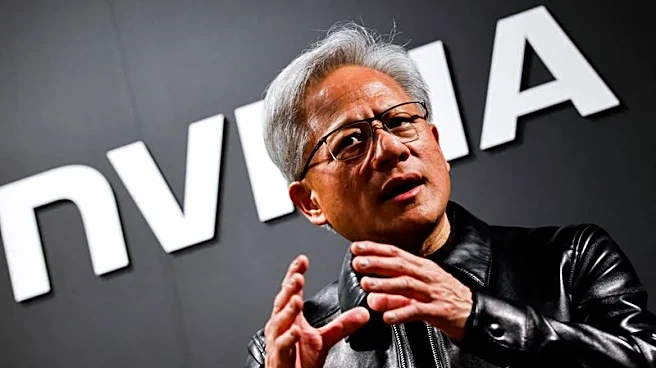
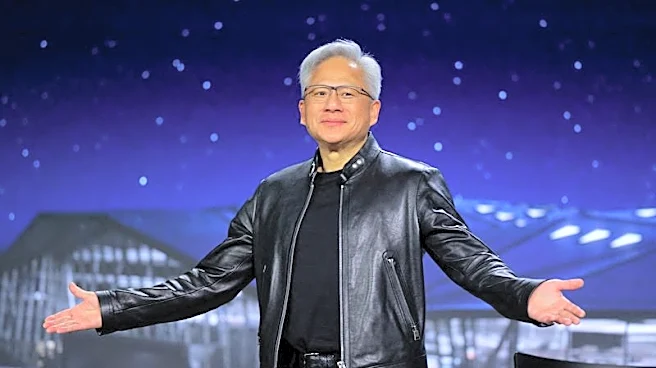
Jensen Huang has been reinstated as the CEO of Nvidia after a 12-day absence, a decision that followed significant market volatility and intervention from senior levels of the U.S. government. Nvidia's board unanimously voted to reinstate Huang as president,
CEO, and director, effective immediately, with Colette Kress returning to her role as CFO. This rapid return comes after Nvidia experienced a loss of approximately $1.2 trillion in market value during Huang's brief departure, marking the stock's worst week ever. The board's decision was influenced by input from the White House, which concluded that Huang poses no national security risk. President Trump had reportedly advocated for Huang's second chance. Huang's reinstatement is accompanied by the establishment of a new national security and export control committee, a search for a chief compliance officer, and an independent investigation into reports of him being a target of foreign intelligence efforts.
Why It's Important?
Jensen Huang's swift reinstatement as Nvidia CEO underscores the critical role of leadership stability in the technology sector and the significant impact of market perception. The $1.2 trillion market value loss during his 12-day absence highlights how quickly investor confidence can erode, particularly for a company as influential as Nvidia in the semiconductor and AI industries. The involvement of the White House in assessing national security risks related to Huang's leadership indicates the strategic importance of Nvidia's technology to U.S. interests, especially in the context of global competition in AI and advanced computing. This event also sets a precedent for how high-profile executive changes in critical tech companies might be handled, potentially involving government oversight to ensure economic stability and national security. The rapid reversal of the board's initial decision reflects the immense pressure from both financial markets and political stakeholders.
What's Next?
Following Huang's reinstatement, Nvidia's stock saw a significant jump, indicating renewed investor confidence. The company will now focus on stabilizing its market position and addressing the concerns that led to Huang's brief departure. The establishment of a new national security and export control committee and the search for a chief compliance officer suggest a heightened emphasis on regulatory adherence and risk management, particularly concerning international trade and intelligence. The independent investigation into foreign intelligence targeting Huang will be crucial in clarifying any potential threats and reinforcing the company's security protocols. This situation may also prompt other U.S. tech companies with critical national security implications to review their executive succession plans and risk assessment frameworks, potentially leading to increased government engagement in corporate governance decisions within the tech industry.
Beyond the Headlines
This event highlights the intricate interplay between corporate governance, national security, and economic stability in the modern era. The rapid return of Jensen Huang, influenced by the White House, suggests a growing recognition of key tech leaders as strategic national assets. It also raises questions about the autonomy of corporate boards when faced with significant market pressure and government interest. The comparison to Sam Altman's quick return to OpenAI further illustrates a trend of rapid leadership changes and reinstatements in the tech industry, often driven by employee loyalty and market demands. This could signal a shift in corporate power dynamics, where the influence of key individuals, particularly founders, can outweigh traditional board decisions. The incident also underscores the increasing geopolitical dimensions of technology, where the leadership of a single company can have implications for national security and economic competitiveness on a global scale.