
What's Happening?
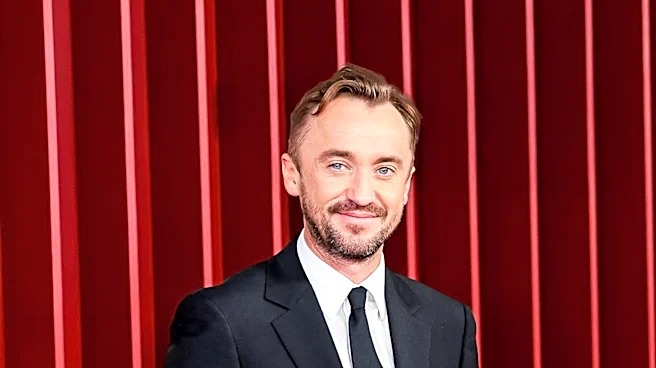
Actor Rupert Grint is set to return to the role of Ron Weasley in Broadway’s “Harry Potter and the Cursed Child” in 2027, marking what he anticipates will be his final portrayal of the character. Grint,
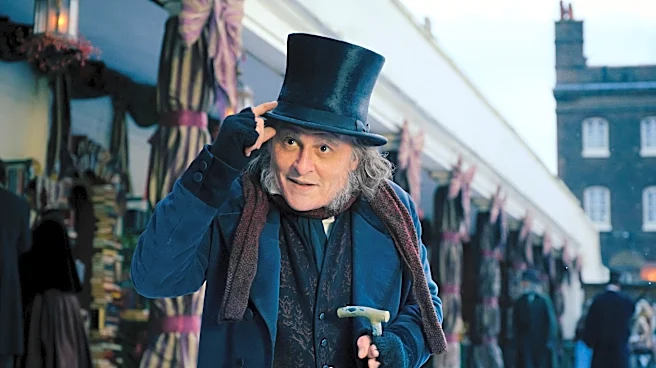
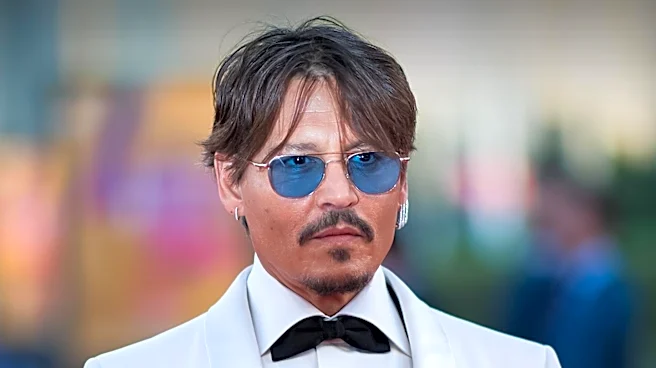
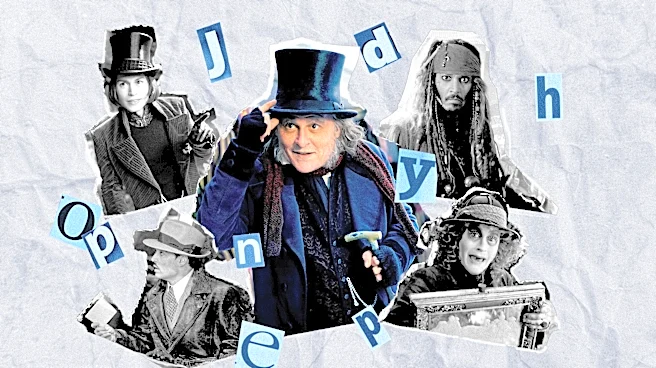
who played Ron Weasley across all eight 'Harry Potter' films, expressed that this return feels like 'closure' for his long-standing connection to the role. He noted that the stage adaptation places Ron in a different context, as a father 30 years after the last film, aligning with Grint's current age. In addition to his return to the wizarding world, Grint is also starring as Bob Cratchit in the new film “Ebenezer,” a reimagined adaptation of 'A Christmas Carol.' In this film, directed by Ti West and written by Nathaniel Halperm, Grint plays opposite Johnny Depp, who portrays Ebenezer Scrooge. Grint described the adaptation as a faithful Dickens story that leans into the horror elements of the Victorian era.
Why It's Important?
Rupert Grint's decision to reprise his iconic role as Ron Weasley for a final time in 'Harry Potter and the Cursed Child' holds significant importance for the entertainment industry and the vast 'Harry Potter' fanbase. This return to a beloved character, particularly one that defined a generation, is likely to generate immense interest and ticket sales for the Broadway production, potentially boosting the theater industry. For Grint, it represents a strategic move to revisit a foundational part of his career while also signaling a definitive transition. Simultaneously, his role in 'Ebenezer' alongside Johnny Depp showcases his versatility and commitment to diverse projects. The film's horror-infused take on a classic story could attract a broader audience, demonstrating the enduring appeal of literary adaptations when presented with a fresh perspective. This dual engagement in both a nostalgic, high-profile stage role and a new cinematic venture positions Grint as a significant figure in contemporary entertainment, appealing to both established fans and new audiences.
What's Next?
Rupert Grint will appear in Broadway's 'Harry Potter and the Cursed Child' in 2027, which he has indicated will be his last time playing Ron Weasley. This engagement is expected to draw considerable attention from 'Harry Potter' enthusiasts globally. Prior to that, his new film 'Ebenezer,' where he stars as Bob Cratchit alongside Johnny Depp, is scheduled to be in theaters on Friday, November 13. The release of 'Ebenezer' will provide an immediate opportunity for audiences to see Grint in a different, more dramatic role, potentially influencing perceptions of his acting range beyond the 'Harry Potter' franchise. The critical and commercial reception of 'Ebenezer' could also impact future roles for Grint and Johnny Depp, particularly given Depp's recent career trajectory. The 'Cursed Child' production will likely see a surge in interest and attendance, especially with an original cast member returning, potentially setting new benchmarks for Broadway revivals.
Beyond the Headlines
Rupert Grint's return to the role of Ron Weasley, even for a limited engagement, highlights a broader trend in the entertainment industry: the leveraging of established franchises and beloved characters to draw audiences. This move taps into deep-seated nostalgia, offering fans a sense of closure and continuity with a character they grew up with. It also underscores the unique challenges and opportunities faced by actors who become synonymous with iconic roles at a young age. Grint's simultaneous involvement in 'Ebenezer,' a darker adaptation of a classic, demonstrates a strategic effort to diversify his portfolio and showcase his range beyond the 'Harry Potter' universe. This balancing act between revisiting a defining role and exploring new artistic avenues reflects the evolving career paths of child stars, often seeking to redefine their public image while still acknowledging their foundational work. The 'Ebenezer' project also touches on the enduring appeal of classic literature and the creative freedom directors and writers take in reinterpreting well-known stories for modern audiences, particularly by incorporating genre elements like horror.