








What's Happening?
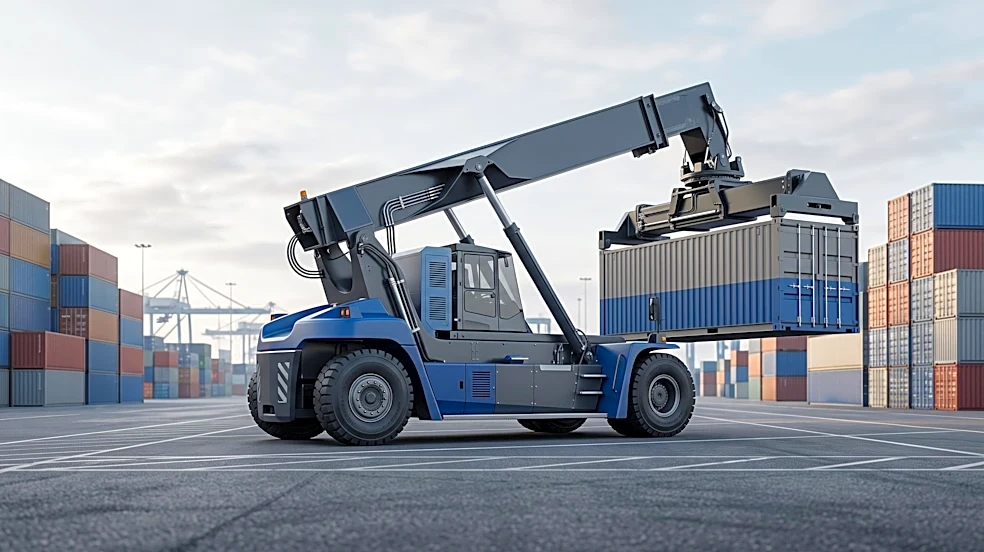
Hyster has delivered a hydrogen-powered ReachStacker to Rotterdam Shortsea Terminals (RST) in the Netherlands as part of a five-year innovation project exploring hydrogen's role in port and logistics decarbonization. The Hyster RSJ46-33XDH/62 ReachStacker,
equipped with a Nuvera 60-kilowatt fuel cell engine and a 130-kilowatt-hour lithium-ion battery, will support operations at Europe’s largest dedicated shortsea shipping hub, primarily handling 45-foot containers. This initiative, supported by the Province of South Holland and the Just Transition Fund (JTF), involves a collaboration between RST, Berkman Energie Services, Hyster, STC Next, and HarbourHUB. Together, they are developing a field lab to demonstrate two innovations: a modular hydrogen refueling station and the hydrogen-powered ReachStacker. The project aims to provide practical operational experience with hydrogen-powered container handling equipment and to demonstrate how hydrogen can be integrated into logistics and industrial processes independently of the electricity grid.
Why It's Important?
This project is highly significant for the U.S. logistics and port industries, as it demonstrates a tangible step towards decarbonizing heavy-duty port equipment. Ports in the U.S. are major economic hubs and significant sources of emissions, making the transition to cleaner technologies crucial for environmental sustainability and public health. Hyster's deployment of a hydrogen-powered ReachStacker provides a real-world case study for the viability and operational benefits of fuel cell technology in demanding container handling applications. For U.S. port operators and logistics companies, this initiative offers valuable insights into the performance, refueling requirements, and overall integration of hydrogen-powered equipment. It could accelerate the adoption of similar technologies in U.S. ports, driving demand for hydrogen infrastructure, fuel cell manufacturing, and specialized maintenance services. The project also highlights the importance of public-private partnerships and innovation funds in de-risking new clean energy technologies and fostering their commercial deployment.
What's Next?
The field lab at Rotterdam Shortsea Terminals will continue to demonstrate the hydrogen-powered ReachStacker and the modular hydrogen refueling station, gathering practical operational experience. The project partners will analyze the performance, efficiency, and reliability of the hydrogen fuel cell technology in a live terminal environment. A joint experience center will be established to train employees, students, and logistics professionals on the safe and efficient use of hydrogen, addressing the human capital aspect of the energy transition. The knowledge gained from this initiative is expected to reinforce South Holland’s position as a leading hub for sustainable logistics and clean energy development, potentially influencing future regulations and standardization within the European Union and beyond. The success of this project could serve as a blueprint for other ports globally, including those in the U.S., looking to adopt hydrogen-powered equipment for decarbonization.
Beyond the Headlines
The deployment of a hydrogen-powered ReachStacker at Rotterdam Shortsea Terminals represents a deeper commitment to transforming the entire logistics ecosystem, not just individual pieces of equipment. This initiative addresses the complex challenge of decarbonizing heavy-duty industrial operations, which are often difficult to electrify due to power demands and operational uptime requirements. Ethically, it underscores the responsibility of industries to mitigate their environmental impact and contribute to cleaner air quality in port communities. The project's focus on training and human capital development highlights the societal aspect of the energy transition, ensuring that the workforce is equipped with the necessary skills for new technologies. Culturally, it signifies a shift towards embracing innovative, sustainable solutions in traditionally carbon-intensive sectors. The collaboration between technology providers, terminal operators, and government bodies demonstrates a holistic approach to achieving sustainability goals, setting a precedent for integrated solutions in the global supply chain.