





What's Happening?
The yellow-and-white cottage at 31 Natchez Street in Seaside, Florida, famously known as Truman Burbank's home in the 1998 film 'The Truman Show,' continues to draw fans. This privately owned residence, one of Seaside's original homes, was central to the movie,
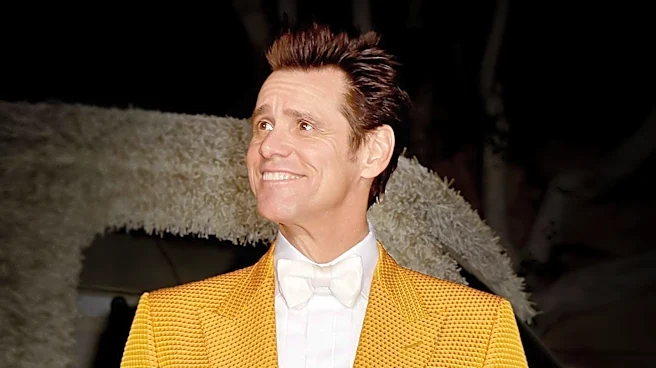
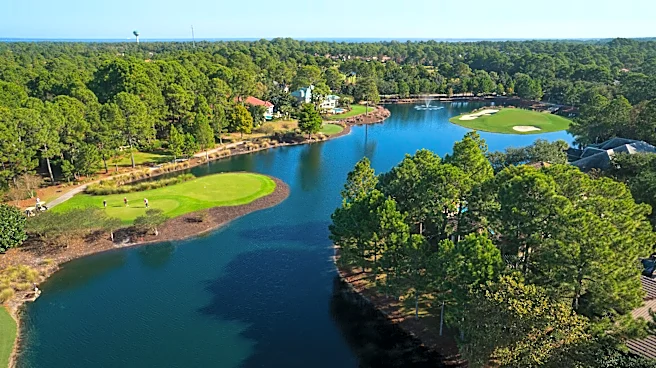
where Jim Carrey's character, Truman, would greet his neighbors daily. The owners have maintained the fictional house number, 36, above the door and have named the property 'The Truman House' in tribute to the film. While the house is not open to visitors, fans are encouraged to take photos respectfully from the brick street outside. Seaside itself, an 80-acre planned community in Walton County, served as the primary filming location for the fictional Seahaven Island, chosen by director Peter Weir for its 'too perfect' aesthetic of picket fences, front porches, and pastel-colored cottages. The production utilized local businesses and residents, with the Modica Market and Seaside Post Office also featuring prominently in the film.
Why It's Important?
The enduring popularity of 'The Truman Show' filming locations highlights the significant cultural and economic impact that cinema can have on small towns. Seaside, Florida, has leveraged its cinematic fame to become a notable tourist destination, attracting moviegoers and architecture enthusiasts alike. This phenomenon demonstrates how a fictional setting can create a tangible legacy, boosting local tourism and commerce long after a film's release. For the residents and businesses of Seaside, the film has provided a unique identity and a continuous stream of visitors, contributing to the local economy. The preservation of the 'Truman House' and other recognizable landmarks reinforces the town's connection to the movie, offering a nostalgic experience for fans and showcasing the town's distinctive urban planning, which predates the film and was a key reason for its selection as a filming site.
What's Next?
The 'Truman House' and other iconic locations in Seaside are expected to remain significant attractions for fans of 'The Truman Show.' The town's commitment to preserving its unique architectural style and its connection to the film suggests that it will continue to embrace its cinematic heritage. Future tourism initiatives may further integrate the film's narrative into the visitor experience, potentially through guided tours or themed events. The ongoing interest in the film's setting also serves as a case study for other communities looking to capitalize on their roles in popular culture. As the film approaches its 30th anniversary, there may be renewed interest and promotional activities that could further boost visitor numbers to Seaside, reinforcing its status as a unique cultural landmark.
Beyond the Headlines
The story of Seaside, Florida, and its role in 'The Truman Show' extends beyond mere tourism; it reflects deeper themes of urban planning and the construction of idealized realities. Seaside was built from scratch in 1981 based on New Urbanism principles, emphasizing walkable neighborhoods and community design. The film's premise—a man living in a meticulously constructed, televised reality—ironically mirrored Seaside's own planned perfection. This convergence raises questions about authenticity, the influence of media on perception, and the desire for idyllic living spaces. The town's continued appeal to visitors, many of whom are drawn by its cinematic portrayal of an 'ideal' community, underscores a societal fascination with curated environments and the blurred lines between fiction and reality in modern life. It also highlights the power of visual media to shape public perception and create lasting cultural touchstones.